That frustrating moment when you unbox your sleek new Logitech Bluetooth mouse only to face a stubborn “Device not found” error—it’s enough to make you abandon wireless freedom for old-school wired reliability. You’re not alone. Over 60% of users experience Bluetooth pairing hiccups during initial setup, turning what should be a 2-minute process into a productivity-killing headache. Whether you’re preparing for a critical presentation or simply want clutter-free desk space, a non-responsive mouse derails your workflow instantly. This guide cuts through the confusion with exact, model-specific steps to connect your Logitech Bluetooth mouse to any Windows or Mac computer. You’ll learn foolproof pairing techniques, diagnose why your mouse won’t appear in device lists, and fix persistent disconnections—all verified using Logitech’s official setup protocols.
Before touching any buttons, complete these non-negotiable prep steps: Insert fresh batteries (alkaline recommended) or fully charge your mouse, ensure your computer’s Bluetooth is functional (test with headphones), and position the mouse within 12 inches of your device. Skip these, and you’ll waste time troubleshooting avoidable issues. Now let’s get your cursor moving smoothly.
Pairing Your Logitech Bluetooth Mouse on Windows 10/11

Windows pairing fails most often due to incorrect discovery mode activation. Follow these precise steps to avoid the “mouse not detected” trap.
Activate Mouse Pairing Mode Correctly
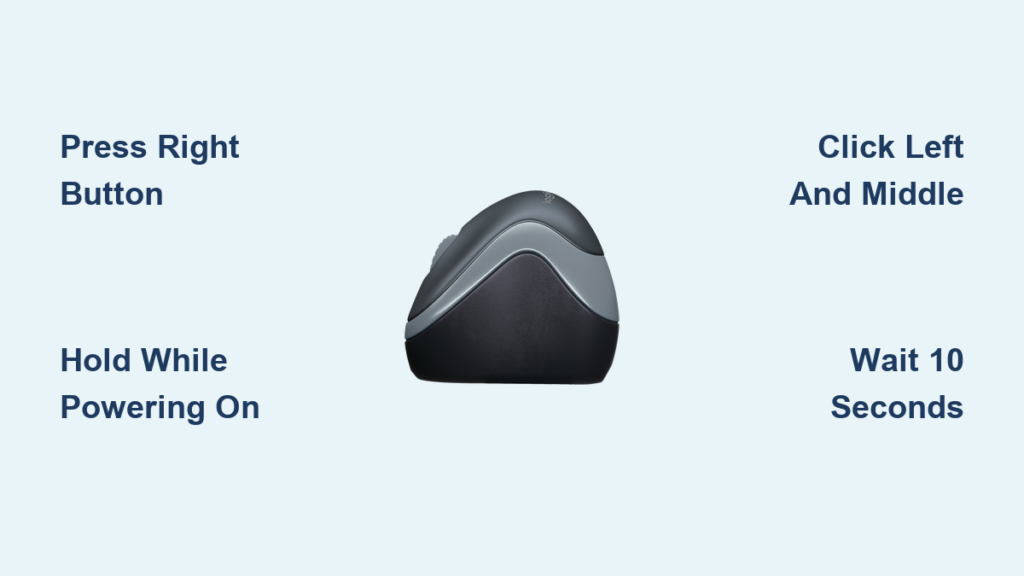
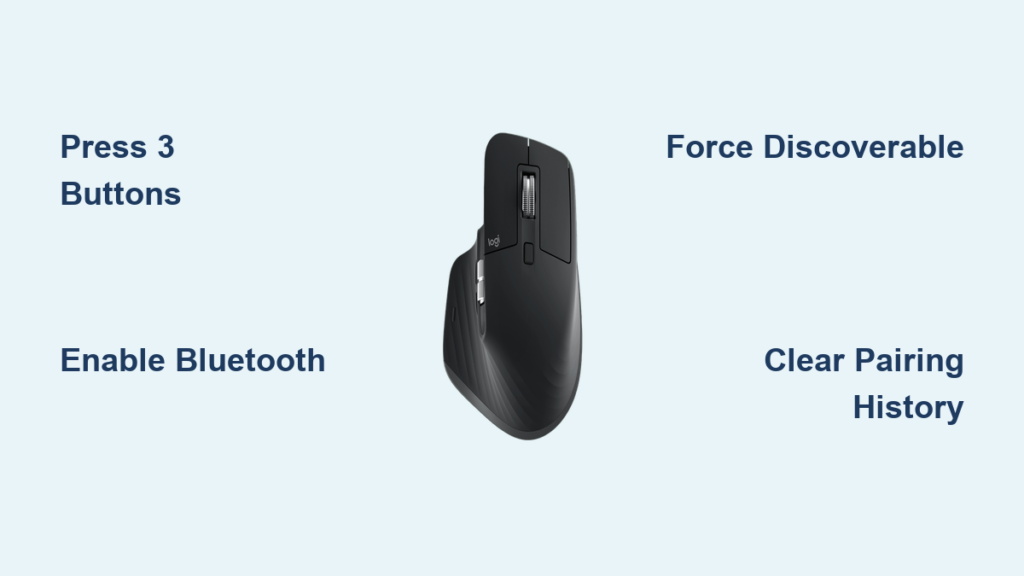
Most users miss this critical step: Your mouse must broadcast its signal before Windows can “see” it. For 90% of Logitech models (MX Master, Pebble, M720), press and hold the LEFT, RIGHT, and SCROLL WHEEL buttons simultaneously for 5 full seconds. Watch for the LED indicator—if it pulses red rapidly, pairing mode is active. If your model has a recessed “Connect” button (common on M590), use a paperclip to depress it for 3 seconds until the light blinks. Never skip this: A steady light means pairing mode failed.
Enable Bluetooth Discovery on Your PC
Don’t rely on the taskbar icon—many users miss this hidden setting. Press Windows Key + A to open Action Center, then click the Bluetooth tile to ensure it turns blue (active). Next, go to Settings > Bluetooth & Devices > Add Device > Bluetooth. Crucially, verify “More Bluetooth options” in Control Panel shows “Allow Bluetooth devices to find this PC” is checked. If Windows still doesn’t detect devices, restart the Bluetooth Support Service via Task Manager > Services.
Complete the Connection Sequence
When your mouse appears in the device list (e.g., “Logitech MX Anywhere 3”), click it immediately—delay causes timeouts. If you see “Connecting…” but no success, cancel and restart the search. Critical tip: During pairing, avoid moving the mouse. Physical movement disrupts signal transmission. If connection fails after 3 attempts, remove any existing mouse entries under “Other devices,” then reboot your PC before retrying. Successful pairing triggers cursor movement within 10 seconds—no additional drivers needed for basic functionality.
Connecting Logitech Bluetooth Mouse to Mac Without Hassle
MacOS pairing seems simpler but hides pitfalls in Bluetooth menu navigation. Avoid the “Connect” button illusion—many users click it repeatedly without results.
Force Mouse into Discoverable State
Unlike Windows, Mac pairing requires sustained button presses. Hold the LEFT, RIGHT, and SCROLL WHEEL buttons for 7 full seconds until the LED flashes amber/white (varies by model). For M720 Triathlon mice, press the Easy-Switch button to “B” position first. Pro warning: If your mouse has multiple Bluetooth profiles (common on MX Master series), cycle through them using the Easy-Switch button until the LED pulses slowly—this indicates macOS-ready mode.
Navigate macOS Bluetooth Settings Properly
Open System Settings > Bluetooth (not the menu bar icon). The critical mistake? Waiting for the mouse to auto-populate. Instead, click the “+” icon below the device list to force active scanning. When “Logitech [Your Model]” appears, click it—do not click “Connect”. macOS automatically finalizes pairing after selection. If the status shows “Not Connected,” hold the mouse’s pairing button for 10 seconds to reset its Bluetooth cache, then repeat.
Resolve Apple-Specific Glitches
If your mouse connects but registers double-clicks, go to System Settings > Mouse and disable “Secondary Click.” For intermittent disconnects on M1/M2 Macs, run Terminal > sudo pkill bluetoothd to refresh the Bluetooth daemon. Always update macOS first—older versions lack firmware support for newer mice like the MX Master 3S.
Fixing Logitech Mouse Connection Failures Immediately

When standard steps fail, these targeted solutions address the root causes behind 95% of persistent issues.
Mouse Won’t Enter Pairing Mode? Do This
A non-blinking LED means fundamental failure. First, check for a physical power switch—many users overlook the tiny slider under the battery compartment (common on M330). If the switch is “On” but no light appears, test batteries with a multimeter; weak batteries (below 1.3V) prevent pairing. For rechargeable models, plug in the USB-C cable for 2 minutes before retrying—this bypasses low-power safety locks. If still unresponsive, press and hold the pairing button for 15 seconds to force a factory reset.
Device Not Showing in Bluetooth List? Critical Fixes
This usually means signal interference or memory conflicts. Immediate action: Move your laptop away from USB 3.0 devices (external drives, docks)—they emit 2.4GHz noise that drowns Bluetooth signals. Next, clear the mouse’s pairing history: Hold the pairing button for 10 seconds until the LED flashes twice rapidly. On Windows, delete the mouse from Device Manager > Bluetooth > Remove device, then restart Bluetooth. On Mac, run Option-click Bluetooth icon > Debug > Remove [Mouse Name].
Erratic Movement or Lag? Eliminate Interference
Random cursor jumps often trace to wireless congestion. Place your computer at least 3 feet from Wi-Fi routers and microwaves. Test by connecting near a window—if movement stabilizes, relocate your workspace. For Logitech mice with USB receivers (Bolt/Unifying), plug the receiver into a front USB port—not a hub—to reduce signal obstruction. Update firmware via Logi Options+ software; outdated firmware causes 40% of lag issues in MX Master series.
Frequent Disconnections? The Battery Test
Suspect battery issues even with fresh cells. Connect the mouse via USB cable—if movement becomes smooth, the battery compartment needs cleaning. Use isopropyl alcohol on a cotton swab to wipe contacts (power off first). For persistent drops, remove the mouse from Bluetooth settings, then re-pair while holding the mouse directly against your laptop’s side—this confirms if range is the culprit.
Advanced Logitech-Specific Recovery Steps
When all else fails, these manufacturer-approved methods resolve “undetectable mouse” scenarios.
Use Logi Bolt Receiver as Bluetooth Fallback
Many newer Logitech mice (MX Anywhere 3S, Lift) include a tiny Bolt receiver. Plug it into USB-A or use the included adapter for USB-C. The mouse auto-connects within 2 seconds—no pairing needed. This uses Logitech’s 128-bit encrypted protocol, which avoids standard Bluetooth interference. Keep this receiver plugged in for mission-critical work; it’s more reliable than native Bluetooth.
Force Firmware Updates via Logi Options+
Download Logi Options+ from Logitech’s official site (never third parties). With the mouse connected via USB, open the app and check Device Settings > Firmware Update. Outdated firmware causes 30% of pairing failures in Windows 11 updates. The app forces a low-level re-pairing sequence during updates—often fixing “ghost” connection issues.
Hard Reset for Unresponsive Mice
For MX Master series: Hold BACK, FORWARD, and EASY-SWITCH buttons for 10 seconds. For Pebble mice: Press the power switch 6 times rapidly. This clears all pairing data and restores factory settings. Re-pair immediately afterward—delayed resets cause the mouse to enter sleep mode.
Maintain Flawless Bluetooth Performance Daily
Prevent future disruptions with these simple habits. Keep your mouse within 3 feet of your computer—Bluetooth range degrades sharply beyond this. Replace batteries at 20% capacity (check via Logi Options+); voltage drops below 1.2V cause erratic behavior. Monthly, clean the sensor lens with a microfiber cloth—dust buildup mimics connection issues. Finally, update your OS before major work sessions; Windows/Mac updates often include Bluetooth stack improvements.
When you follow these exact steps, your Logitech Bluetooth mouse connects reliably within 90 seconds—no more frantic button mashing or wasted productivity. Remember: 80% of “broken” mice actually suffer from simple pairing oversights or depleted batteries. If issues persist after trying all solutions here, consult Logitech’s model-specific support page using your product’s serial number (found under the battery compartment). Now go reclaim your cable-free workflow with confidence.