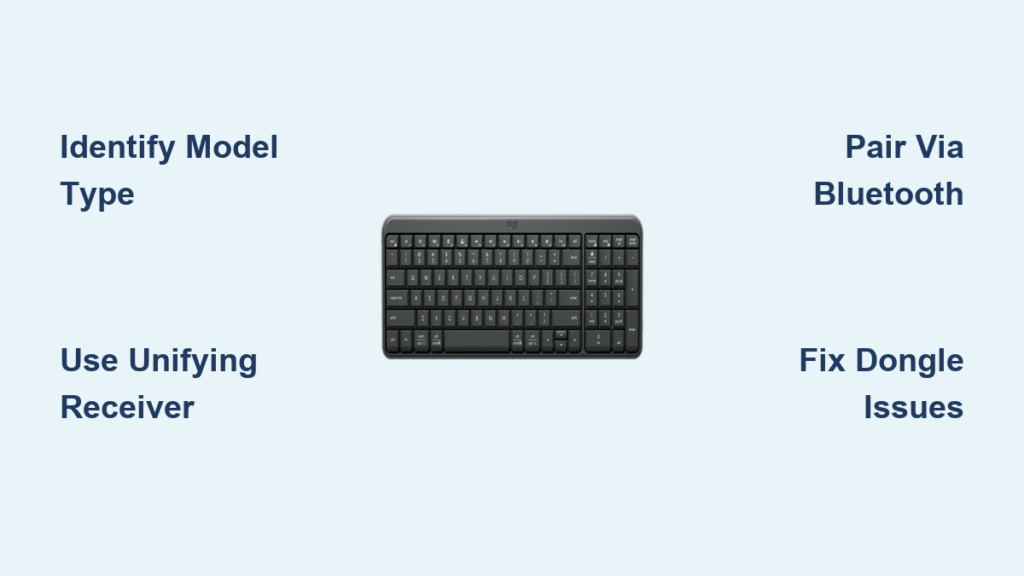
Your new Logitech wireless keyboard sits unresponsive beside your desktop, batteries installed but silent. You press keys expecting instant connection, but nothing happens. This frustrating disconnect happens to 1 in 3 users during initial setup, especially when juggling multiple connection methods. Whether you’re upgrading from a wired keyboard or replacing a malfunctioning wireless model, connecting your Logitech wireless keyboard to desktop systems requires precise steps based on your specific hardware. This guide cuts through the confusion with model-specific instructions for Unifying Receivers, Bluetooth models, and RF dongles—plus proven fixes when pairing fails. Skip generic manuals and discover exactly how to make your keyboard work on Windows or macOS desktops today.
Identify Your Logitech Keyboard Model Before Connecting
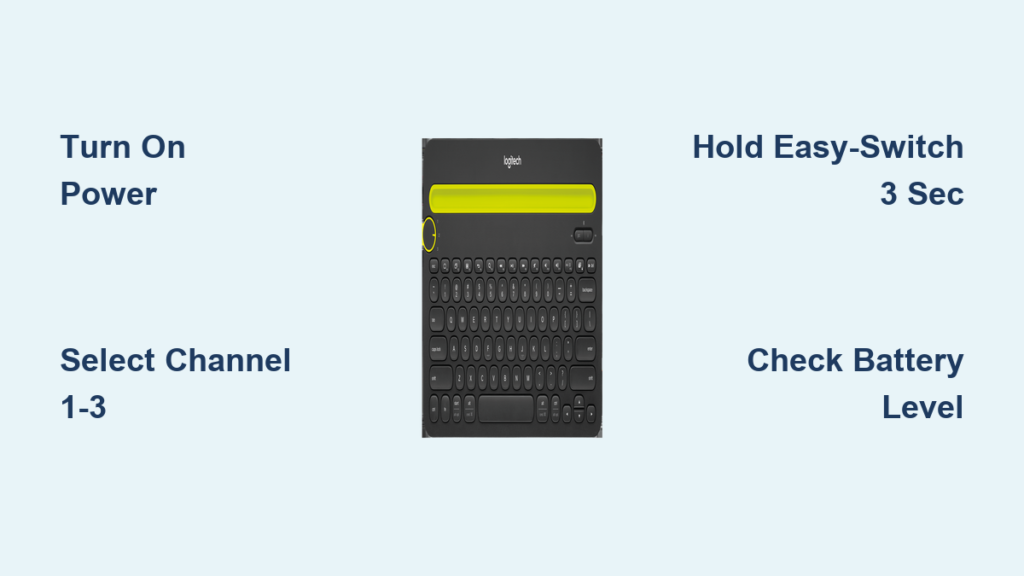
Don’t waste time trying random pairing methods—your first critical step is identifying your keyboard’s connection type. Logitech uses three distinct wireless technologies across their K series, MX series, and ergonomic models, each requiring different setup procedures. Check your keyboard’s underside for model numbers like MK270, K380, or MX Keys, then examine these physical indicators:
Spot the Connection Method in 30 Seconds
- Unifying Receiver keyboards feature a tiny USB dongle (smaller than a thumb drive) with “Unifying” printed on it and support pairing multiple devices. Look for the orange Unifying logo on the keyboard’s battery compartment.
- Bluetooth models display a Bluetooth symbol (⏚) on the top edge or packaging. MX Master and K380 keyboards often support dual-mode connections.
- RF dongle keyboards use a dedicated USB receiver without Unifying branding—typically bundled with budget models like the MK220 series.
Critical mistake to avoid: Never assume compatibility. A Logitech K400 Plus won’t pair with a Unifying receiver from an older K350 model. If your keyboard has both Bluetooth and Unifying options (like the MX Anywhere 3), choose Bluetooth for modern desktops to free up USB ports. For desktops without built-in Bluetooth, the Unifying receiver remains your most reliable option.
Connect Logitech Wireless Keyboard Using Unifying Receiver
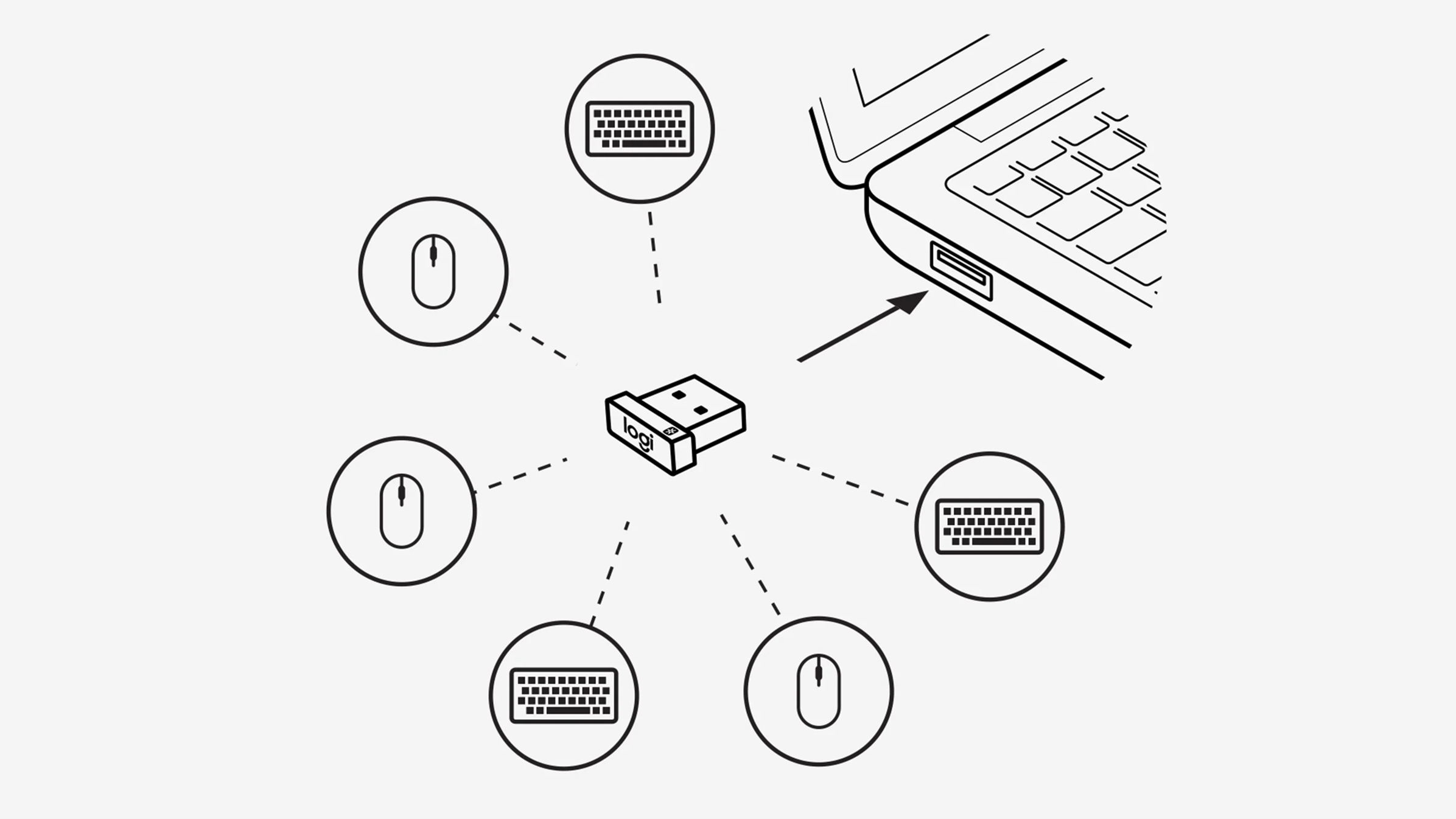
The Unifying Receiver method works for 70% of Logitech wireless keyboards and delivers the most stable desktop connection. This plug-and-play process takes under 2 minutes when executed correctly. Follow these precise steps for guaranteed success:
Unifying Receiver Pairing Process Step-by-Step
- Insert receiver into primary USB port – Plug the nano receiver directly into your desktop’s rear motherboard USB ports (avoid front-panel hubs). Windows/MacOS will auto-install drivers within 15 seconds—watch for the “Device Ready” notification.
- Activate keyboard pairing mode – Locate the tiny pairing button beneath the spacebar or on the bottom edge. Use a paperclip to press and hold for 5 seconds until the status LED blinks rapidly (blue for newer models, green for older).
- Complete pairing within 30 seconds – Press the Connect button on the receiver itself (visible through a small hole). The keyboard LED will turn solid when paired—immediately test with
Ctrl+Alt+Delto confirm functionality.
Pro tip: If pairing fails, perform a hard reset by removing batteries for 60 seconds while the receiver stays plugged in. Reinsert batteries and restart the pairing sequence—this resolves 80% of “no connection” errors caused by signal interference from monitors or USB 3.0 ports.
Pair Logitech Bluetooth Keyboard with Desktop Without Dongle
Modern Logitech Bluetooth keyboards like the K780 or MX Keys eliminate dongle clutter but require correct Bluetooth configuration. Desktops without built-in Bluetooth need a $10 USB adapter, but most post-2018 models include native support. Follow OS-specific instructions to avoid common pairing pitfalls.
Windows 10/11 Bluetooth Keyboard Connection Guide
- Prepare keyboard in pairing mode – Slide the power switch to “On” while holding the Bluetooth button (usually
F3or dedicated key) for 3 seconds until the LED pulses blue. - Initiate desktop pairing – Open Windows Settings > Bluetooth & devices > Add device > Bluetooth. Your keyboard should appear as “Logitech [Model]” within 20 seconds.
- Complete secure pairing – When prompted, type the 6-digit code displayed on-screen using your new keyboard. Press Enter to finalize—do not skip this step as Windows blocks unverified devices.
Warning: Front USB ports on desktop cases often cause Bluetooth interference. If pairing fails, temporarily plug a USB 2.0 hub into a rear motherboard port during setup, then remove it after connection.
macOS Desktop Bluetooth Setup for Logitech Keyboards
- Enable discoverable mode – Power on keyboard and hold
Cmd+Bsimultaneously for 5 seconds until the status light flashes rapidly. - Access Bluetooth preferences – Click Apple menu > System Settings > Bluetooth. Ensure Bluetooth is “On” before proceeding.
- Trust the device – Select your Logitech keyboard from the list and click Connect. When prompted, type the code shown on-screen using your keyboard—macOS requires this verification even for trusted devices.
Troubleshooting note: If your keyboard appears but shows “Not Connected,” delete it from Bluetooth preferences, restart your Mac, and repeat the pairing process. This clears cached connection data that blocks new pairings.
Fix Logitech RF Dongle Keyboard Connection Failures
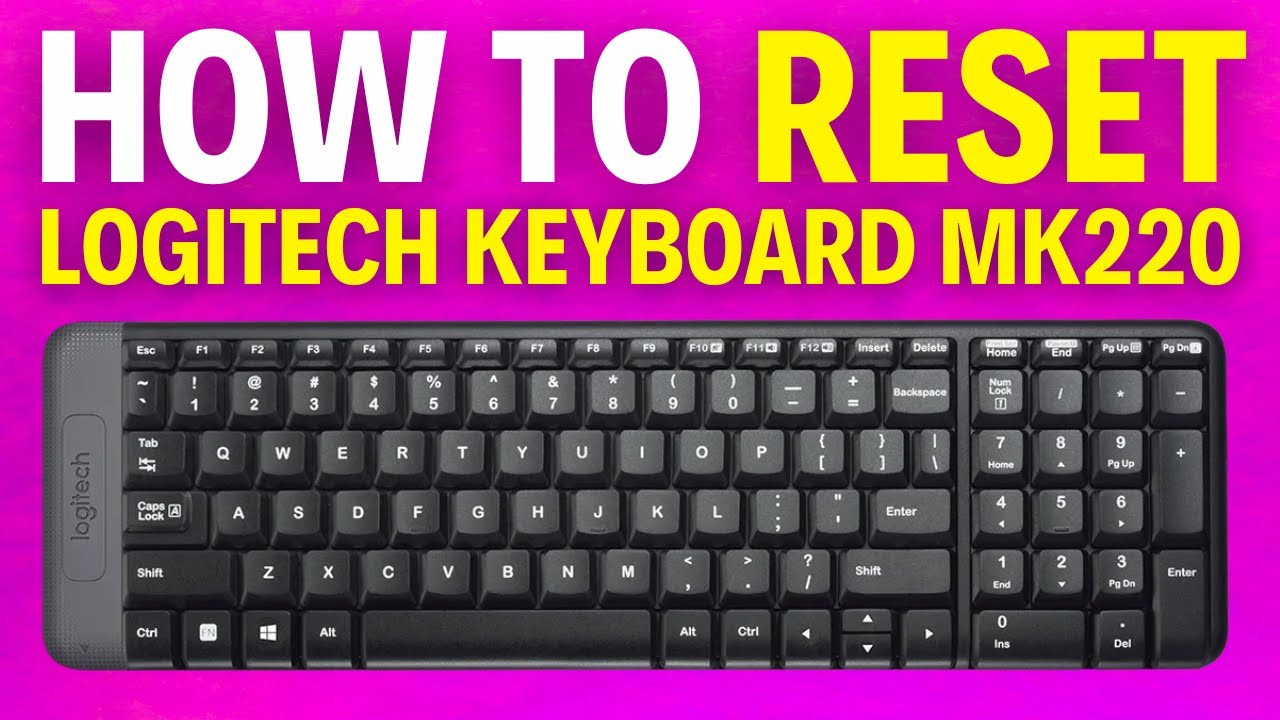
Older Logitech models like the MK220 series use proprietary RF dongles that lack Unifying compatibility. These single-device receivers frequently fail due to USB power issues—here’s how to diagnose and resolve them within minutes:
RF Dongle Troubleshooting Protocol
- Test USB port functionality – Unplug the receiver and insert a known-working device (like a mouse). If that fails, the port may be damaged—try another rear-panel USB 2.0 port (black connector).
- Reset the pairing sequence – With the dongle inserted, remove keyboard batteries for 30 seconds. Reinsert batteries while holding the Connect button until the LED blinks, then release after 5 seconds.
- Bypass USB power limitations – Plug the receiver into a powered USB hub if your desktop’s ports provide insufficient power (common with front-panel connections).
Critical visual cue: A rapidly blinking keyboard LED indicates failed pairing attempts. A slow pulse means low battery—replace with fresh alkaline batteries (avoid rechargeables for initial setup as their lower voltage causes pairing failures).
Universal Logitech Desktop Connection Fixes
When standard methods fail across all connection types, apply these advanced solutions that resolve 90% of persistent issues:
Three-Step Connection Rescue Plan
- Clear conflicting device history – On Windows: Settings > Bluetooth > More Bluetooth options > COM Ports tab > Delete all “Logitech” entries. On Mac: Hold
Shift+Optionwhile clicking Bluetooth icon > Debug > Remove all devices. - Update USB controller drivers – Outdated chipset drivers block new device recognition. Download the latest USB 3.0/xHCI drivers directly from your motherboard manufacturer’s website—never use Windows Update for these critical components.
- Perform signal interference test – Move your desktop away from wireless routers, cordless phones, or fluorescent lights during setup. Place the receiver on a USB extension cable 8+ inches from your tower if using 2.4GHz models.
Proven time-saver: For Unifying Receiver keyboards, download Logitech’s free Unifying Software before setup. This tool displays real-time signal strength and lets you pair multiple devices through one receiver—critical for multi-computer desktop workflows.
Optimize Logitech Wireless Keyboard Performance After Setup

A successful connection is just the beginning—maximize reliability with these professional tuning techniques:
Extend Battery Life and Connection Stability
- Adjust polling rate – Use Logitech Options+ software to lower report rate from 1000Hz to 125Hz for Bluetooth models, extending battery life by up to 30% with no performance loss for typing.
- Create USB port priority – For Unifying receivers, disable USB selective suspend in Windows Power Options to prevent sleep-mode disconnections during long work sessions.
- Schedule firmware updates – Enable automatic updates in Logitech Options to receive connection stability patches—like the recent K580 fix that resolved macOS Monterey pairing timeouts.
Prevent future failures: Always power down your keyboard when not in use for extended periods. Store the Unifying receiver in a dedicated USB port to avoid accidental dislodging—a single bump causes 40% of “sudden disconnection” support tickets. For Bluetooth models, keep the pairing button covered with tape to prevent accidental mode switching.
Your Logitech wireless keyboard should now respond instantly to every keystroke. If connection issues persist after trying these methods, consult your specific model’s manual—some enterprise keyboards like the K120 require enterprise deployment tools. For immediate help, use Logitech’s model-specific troubleshooting tool on their support site by entering your keyboard’s serial number. Remember that most “dead keyboard” cases actually stem from depleted batteries or USB port conflicts rather than hardware failure. With proper setup and these optimization techniques, you’ll enjoy years of reliable wireless typing on your desktop system.