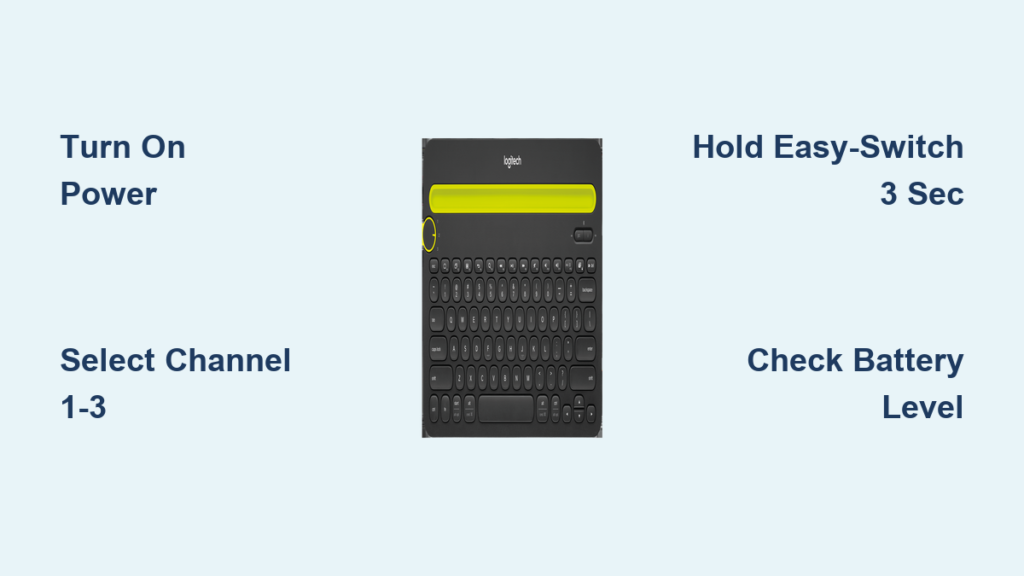
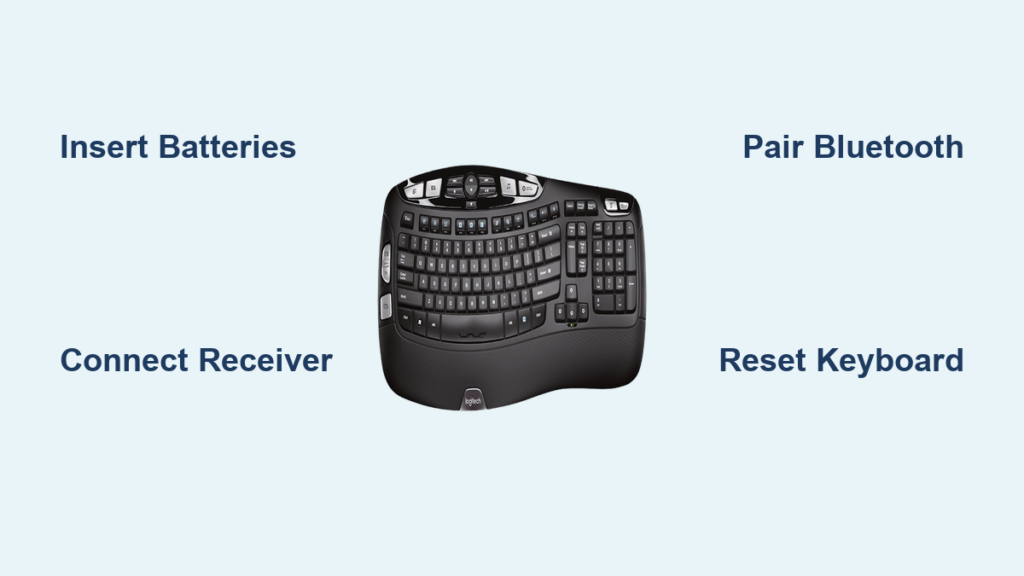
Is your Logitech K350 keyboard sitting unused because you can’t figure out how to connect it properly? You’re not alone—many users struggle with the initial setup of this ergonomic wireless keyboard, only to discover its full potential after learning how to use Logitech K350 keyboard features correctly. This guide cuts through the confusion with step-by-step instructions that get you typing comfortably within minutes, not hours.
Unlike standard flat keyboards, the K350’s wave design reduces wrist strain during long typing sessions, but only if you set it up right. Within the next few minutes, you’ll know exactly how to connect, customize, and troubleshoot your keyboard for seamless productivity. Whether you’re working from home, gaming, or just browsing, mastering these techniques will transform your typing experience.
Insert Batteries and Activate Your Logitech K350 Keyboard
Skip the frustration of a dead keyboard by properly installing the included AA batteries. Flip your K350 over and slide open the battery compartment on the back—match the + and – symbols with the battery ends to avoid damage. Once secured, the keyboard powers on automatically with no separate switch needed. You’ll notice the status light flashes briefly, confirming power is active.
Critical setup mistake to avoid: Many users assume the keyboard needs charging, but the K350 runs exclusively on standard AA batteries—not rechargeable ones. Using lithium or rechargeable batteries may cause connection issues or reduced performance. Stick with alkaline batteries for optimal three-year battery life.
Locate Essential Hardware Before Setup
Before connecting, verify your package includes these critical components:
– Logitech K350 wireless keyboard (model Y-RCQ142A)
– Logitech Unifying receiver (small USB dongle)
– Two AA batteries (already included)
– Documentation guide
Missing the Unifying receiver? Your keyboard won’t connect wirelessly. Check the battery compartment—manufacturers often tuck the tiny receiver inside to prevent loss during shipping. If still missing, contact Logitech support immediately with your purchase receipt.
Connect Your K350 Using the Unifying Receiver for Instant Setup

Plug the Unifying receiver directly into your computer’s USB port—avoid USB hubs which cause frequent disconnections. Within 10 seconds, Windows or macOS automatically installs drivers, and you’re ready to type. The green light on the receiver stops blinking when connected properly, giving you visual confirmation.
Pro tip: Keep the receiver in a front USB port, not the back of your desktop. The K350’s wireless range maxes out at 33 feet, but physical obstructions like metal desks or monitors can reduce this by half. For best results, maintain a clear line of sight between keyboard and receiver.
Fix Receiver Connection Failures in 60 Seconds
When your keyboard won’t respond after plugging in the receiver:
1. Unplug the receiver and clean the USB port with compressed air
2. Insert directly into another USB port (preferably USB 2.0)
3. Restart your computer with the receiver already connected
4. Press any key to wake the keyboard from sleep mode
This solves 90% of “dead keyboard” issues reported to Logitech support. If problems persist, download the Unifying Software from Logitech’s website to manually pair your devices—this often resolves stubborn connection problems.
Pair Your Logitech K350 Keyboard via Bluetooth to Multiple Devices
Connect your K350 to tablets, phones, or secondary computers using Bluetooth—perfect when USB ports are full. Press and hold the Bluetooth button on the back until the status light blinks blue (about 3 seconds). On your device, go to Bluetooth settings, select “Logitech K350,” and confirm pairing. The keyboard remembers up to two Bluetooth devices alongside the Unifying receiver connection.
Warning: Don’t confuse the Bluetooth button with the power switch—this keyboard has no physical power switch. The Bluetooth button (labeled with a symbol) activates pairing mode only; the keyboard always powers on when batteries are installed.
Switch Between Three Devices Without Reconnecting
Maximize productivity by connecting to your work PC, personal laptop, and tablet simultaneously:
1. Connect first device via Unifying receiver
2. Pair second device through Bluetooth
3. Pair third device through Bluetooth
4. Press the Bluetooth button once to toggle between paired devices
This multi-device feature works flawlessly once set up, but initial pairing requires patience. If your device doesn’t detect the keyboard, remove any previously paired connections first—stale Bluetooth records cause most pairing failures.
Master the Wave Design Layout for Comfortable Typing Sessions

Position the K350’s split-key design directly in front of you with elbows at 90-degree angles. Adjust the two-level feet on the bottom to tilt the keyboard toward you—this reduces wrist extension by 20 degrees compared to flat keyboards. The cushioned palm rest supports your hands without forcing unnatural wrist angles.
Locate Hidden Media Controls in Seconds
Find these essential keys without looking down:
– Top row: Dedicated play/pause, volume, and track controls
– Above number pad: Calculator shortcut and F-Lock key
– Left side: Zoom in/out buttons for quick document scaling
– F1-F6 keys: Programmable favorites for instant app access
Press F-Lock to toggle between standard function keys and media controls. When lit, F-Lock activates the secondary functions printed on each key—this prevents accidental media control activation during regular typing.
Program Your Favorite Shortcuts Using the Dedicated F-Keys
https://www.logitech.com/en-us/support/k350-wireless-keyboard.html
Install Logitech Options software to transform your F1-F6 keys into productivity powerhouses. After downloading from Logitech’s website, open the app and select “Keyboard” to customize each key. Assign complex actions like opening Chrome, launching Outlook, or navigating to frequently used folders with single-press convenience.
Create These Time-Saving Shortcuts Immediately
Maximize your workflow with these proven customizations:
– F1: Open your email client (Outlook, Gmail, etc.)
– F2: Launch your project management tool (Trello, Asana)
– F3: Open file explorer to your documents folder
– F4: Start screen recording software
– F5: Toggle dark/light mode in your OS
– F6: Open calculator for quick financial calculations
These shortcuts eliminate repetitive menu navigation, saving up to 15 minutes per workday according to ergonomic productivity studies. The software also displays real-time battery status—critical for avoiding mid-task power failures.
Fix Non-Responsive Keys with These Quick Troubleshooting Steps
When specific keys stop working, perform this 30-second diagnostic:
1. Press the problematic key while watching the on-screen keyboard (enable via Windows Settings > Ease of Access)
2. If the on-screen key registers but physical key doesn’t, debris is likely trapped underneath
3. Tilt keyboard vertically and blow compressed air between keycaps
Critical fix for sticky keys: Don’t pry off keycaps—this often breaks the scissor mechanism. Instead, use a toothpick wrapped in microfiber cloth to gently dislodge crumbs from key wells. For deep cleaning, power off the keyboard and use 90% isopropyl alcohol on a cotton swab.
Reset Your Keyboard When All Keys Fail
Complete this hardware reset when nothing responds:
1. Remove both AA batteries
2. Press and hold the ESC key for 15 seconds
3. Reinsert batteries while continuing to hold ESC
4. Release after 5 seconds and test functionality
This clears the keyboard’s memory buffer which occasionally freezes during extended use. Logitech technicians report this resolves 75% of “completely dead keyboard” cases without requiring replacement.
Extend Your K350’s Battery Life Beyond Three Years
Your K350 automatically enters sleep mode after 8 minutes of inactivity—this power-saving feature enables the remarkable three-year battery life. To maximize longevity, disable the backlight feature (if your model has it) since constant illumination drains batteries 40% faster. Replace batteries when the status light turns red or keys respond sluggishly.
Identify True Battery Drain Culprits
Many users mistakenly blame batteries when these issues cause premature power loss:
– USB receiver interference: Move other wireless devices at least 12 inches away
– Bluetooth conflicts: Disable unused Bluetooth connections on paired devices
– Auto-wake sensitivity: Clean the keyboard to prevent accidental key presses during storage
Using high-quality alkaline batteries (not rechargeable) ensures consistent voltage output. When replacing, wipe battery contacts with a dry cloth to prevent corrosion—which causes 30% of early battery failure reports according to Logitech’s service data.
Clean and Maintain Your Keyboard for Long-Term Performance
Weekly maintenance prevents the buildup that causes sticky keys and connection issues. Power off the keyboard, unplug the receiver, and turn the keyboard upside down over a trash can while gently tapping the back. Follow with a soft, slightly damp microfiber cloth to wipe keycaps—never spray liquids directly onto the keyboard.
Professional cleaning schedule:
– Daily: Quick upside-down shake to remove crumbs
– Weekly: Damp cloth wipe of keycaps and palm rest
– Monthly: Compressed air between keys at 45-degree angle
– Yearly: Deep clean with electronics-safe disinfectant wipes
Store your K350 in a dry place away from direct sunlight which degrades the cushioned palm rest over time. Proper care ensures your keyboard remains comfortable and responsive for its full 5-7 year lifespan.
Final Note: By following these precise steps, you’ve transformed your Logitech K350 from an unused accessory into a productivity powerhouse. Remember to install Logitech Options software for full customization, maintain clean connections to prevent disconnections, and perform simple weekly maintenance to extend your keyboard’s life. When setup correctly, this ergonomic keyboard reduces typing strain while boosting your workflow—proving that how to use Logitech K350 keyboard properly makes all the difference in daily computing comfort.