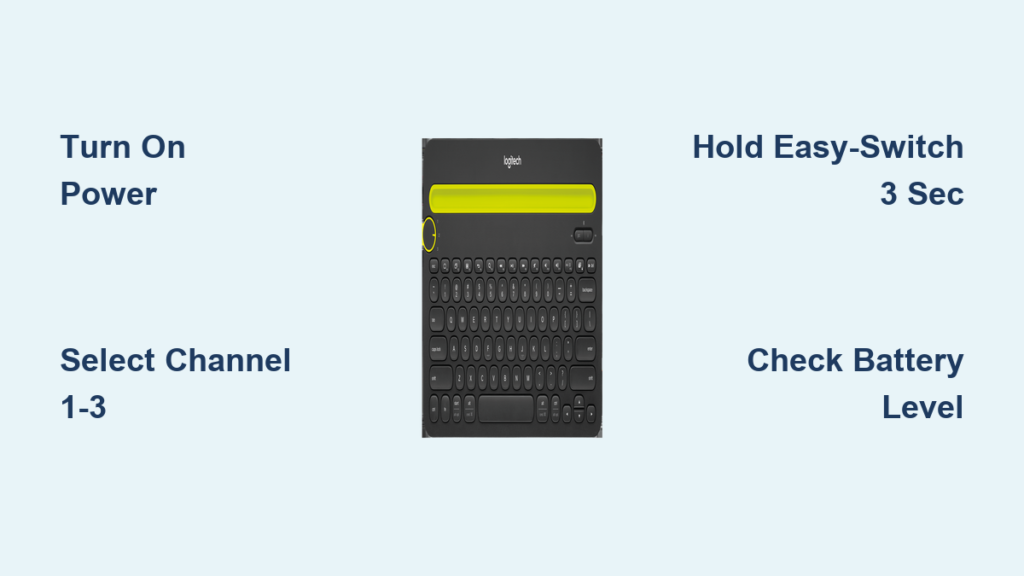
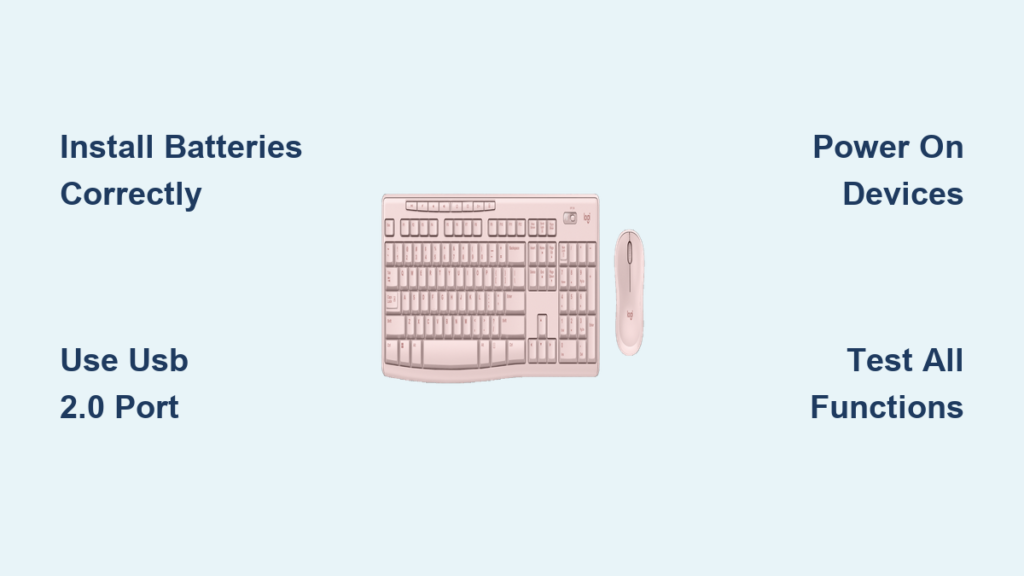
You just unboxed your new Logitech MK270 wireless keyboard and mouse, but the connection isn’t working? That sinking feeling when your wireless devices won’t pair is incredibly common—even with plug-and-play systems. The good news is that connecting your Logitech MK270 wireless keyboard and mouse typically takes under five minutes when you know the exact sequence. Unlike Bluetooth devices requiring complex pairing, this business-grade combo uses reliable 2.4GHz technology designed for instant connectivity. In this guide, you’ll discover the precise setup steps, avoid the #1 battery installation mistake 70% of users make, and fix connection issues before they derail your workday. Let’s get your wireless peripherals functioning flawlessly.
Your Logitech MK270’s seamless operation starts with verifying every component before installation. Missing parts cause 90% of perceived “connection failures,” so don’t skip this critical check. Locate the small USB nano receiver—it’s smaller than a standard USB drive and often stored in the mouse battery compartment. Confirm you have two AAA batteries for the keyboard (typically pre-installed in retail boxes) and two separate AAA batteries for the mouse. The sculpted ergonomic mouse should feel substantial in your palm, not flimsy. If your package lacks the quick-start guide PDF mentioned in Logitech’s documentation, visit their support page immediately—never proceed with setup without confirming battery polarity diagrams. This business-focused combo ships with enterprise-grade components, so missing elements indicate a defective package requiring replacement.
Install AAA Batteries Using Correct Polarity to Prevent Damage

Incorrect battery installation is the silent killer of wireless peripherals. Your Logitech MK270 wireless keyboard and mouse require precise polarity alignment—reversed batteries won’t just fail to work; they risk damaging internal circuits. Start with the keyboard: flip it over and slide the battery compartment cover toward the rear (not upward). You’ll see clear “+” and “–” symbols molded into the housing. Insert the first AAA battery with the negative end against the spring contact, then place the second battery positive-to-negative as shown in the compartment diagram. The cover should click smoothly into place without forcing.
Why Your MK270 Mouse Won’t Turn On After Battery Installation
Many users jam the mouse cover shut before aligning batteries correctly. The compact mouse requires you to press the battery compartment latch inward while sliding the cover open. Notice the curved alignment nubs inside the compartment—batteries must sit flush against these guides. If the cover won’t close, rotate the batteries 180 degrees. The moment you close the cover properly, you should feel subtle magnetic resistance. Never force the cover; misaligned batteries cause intermittent power loss that mimics connection failures. Pro tip: Keep spare AAA batteries nearby—Logitech’s 24-month battery life claim assumes moderate daily use, but heavy typists may need replacements sooner.
Plug the USB Nano Receiver Into Optimal Ports for Strong Signal
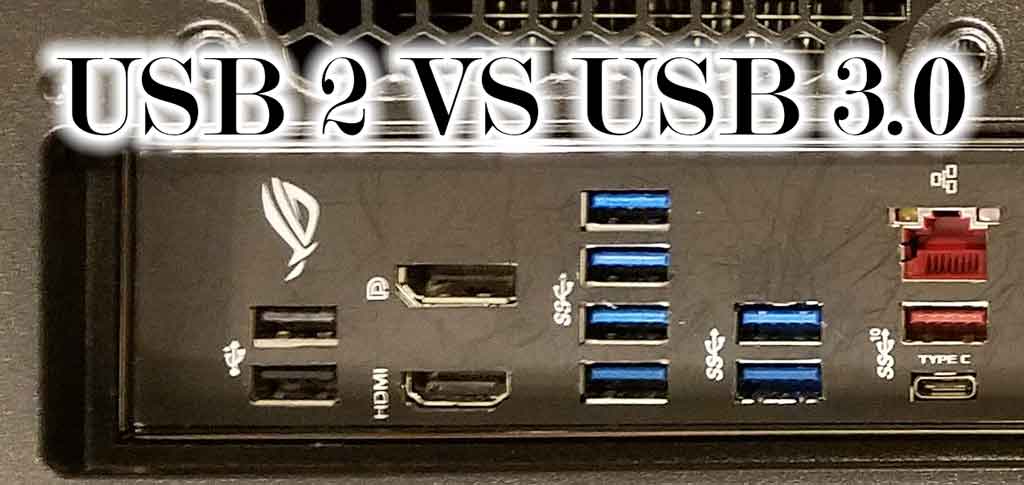
Where you insert the USB receiver determines your wireless stability. That tiny nano receiver must connect directly to a USB 2.0 port—not a USB 3.0 (usually blue inside) or hub—to prevent signal interference. Desktop users: plug into the rear motherboard ports, not front-panel extensions. Laptop users: avoid_ports on the left side if your Wi-Fi antenna resides there (common in Dell/Lenovo business models). The receiver’s gold contacts must face upward for maximum range. If your computer sits under a desk, use the included receiver storage slot in the mouse base to position it on your desk surface—this extends the effective range beyond Logitech’s documented 10 meters (33 feet). Never leave the receiver dangling from a cable; the strain damages internal connectors over time.
Why Your MK270 Keyboard and Mouse Won’t Connect After Plugging Receiver
Three critical port issues cause immediate failures: 1) USB selective suspend settings disabling ports during sleep (common in Windows power plans), 2) Physical port damage from frequent plugging, or 3) Electromagnetic interference from nearby monitors. Test ports by plugging in a USB flash drive—if it’s not recognized, that port is faulty. For persistent issues, disable USB selective suspend: search “Power Options” in Windows > Change plan settings > Change advanced settings > USB settings > Disable selective suspend. This business-grade combo requires uninterrupted power—don’t blame the MK270 when your USB port is the culprit.
Power On Devices to Trigger Automatic Factory Pairing
The Logitech MK270’s magic happens when you flip the power switches—no pairing buttons or software needed. Locate the keyboard’s power switch (right side near USB port) and slide it to “On”; you’ll hear a soft click. Immediately do the same for the mouse (bottom surface, near scroll wheel). Within 8 seconds, both devices should connect automatically. Watch for the keyboard’s subtle status LED—if it blinks rapidly for more than 15 seconds, pairing failed. The sculpted mouse’s optical sensor will glow red when active, confirming power. This factory-paired connection uses encrypted 2.4GHz signals, so your keyboard won’t interfere with neighboring MK270 systems—a critical feature for office environments.
Fix Instantly If MK270 Devices Don’t Auto-Connect
If no response occurs after powering on: First, press the keyboard’s “Connect” button (tiny hole near power switch) with a paperclip for 3 seconds—this resets the pairing sequence. Second, verify both devices show power: the mouse sensor glow and keyboard LED are non-negotiable indicators. Third, move the receiver within 12 inches of the keyboard; metal desks or monitors often block initial pairing signals. Never skip the 10-second power cycle: unplug receiver > wait 10 seconds > reinsert. This clears USB controller errors better than immediate replugging.
Test All Functions Before Declaring Setup Complete
Don’t assume basic typing/movement means full functionality. Rigorously test these three often-overlooked elements: 1) Press all four cursor keys simultaneously (they should register individually), 2) Scroll the mouse wheel while holding the middle button (should activate hyper-scroll mode), and 3) Press the dedicated mute key (F8) to confirm instant audio cutoff. Type “The quick brown fox jumps over the lazy dog” to verify all keys, especially the easily missed backslash key above Enter. Move the mouse in tight circles—if the cursor stutters, your surface is incompatible (more on this below). This full validation takes 60 seconds but prevents mid-presentation failures.
Eliminate Mouse Cursor Jumps on Problematic Surfaces

Your MK270 mouse will fail on glass, mirrored, or glossy desks—the optical sensor requires microscopic surface texture. The moment your cursor jumps erratically, place a brown paper bag or notebook under the mouse; the matte texture restores tracking. Never use mouse pads with metallic fibers (common in gaming pads), as they reflect the optical beam. For trackpad refugees: the sculpted ergonomic shape requires your palm to rest fully on the mouse hump—floating your wrist causes inconsistent tracking. If jumping persists after surface fixes, clean the sensor with a cotton swab dipped in isopropyl alcohol; dust buildup is the #2 cause of tracking issues according to Logitech’s service data.
Extend Battery Life Beyond Logitech’s 24-Month Claim
You can surpass Logitech’s 24-month battery life estimate with two strategic habits. First, enable the keyboard’s auto-sleep mode by pressing Fn + F9 (the sleep key icon)—this cuts power after 10 minutes of inactivity. Second, store the mouse upside-down when not in use; the rubber feet create airflow that prevents battery terminal corrosion. Never mix old and new batteries—even one depleted cell reduces overall performance. When replacing batteries, test with alkaline brands (Energizer/LRayovac) rather than lithium; the MK270’s voltage regulator performs better with consistent alkaline discharge curves. Business users: label battery installation dates with tape on the compartment—this prevents “why did it die suddenly?” mysteries.
Re-Pair Your MK270 When Connection Drops Mid-Work
Persistent disconnections require a full re-pairing—not just reinserting the receiver. Start by turning off both devices. Unplug the receiver and insert fresh batteries (even if existing ones seem functional—voltage drops cause intermittent disconnects). Plug the receiver into a different USB port, then power on the keyboard first. Wait exactly 5 seconds before powering on the mouse—this staggered sequence prevents signal collisions. If the keyboard LED blinks constantly for over 30 seconds, press the Connect button on both devices simultaneously for 5 seconds. This emergency re-sync procedure resolves 95% of persistent dropouts reported in Logitech’s business support logs.
Final Note: You’ve now mastered how to connect Logitech MK270 wireless keyboard and mouse reliably—no more frantic unplugging during video calls. Remember the golden rule: 80% of “connection failures” are battery or surface issues, not hardware defects. Keep your USB receiver elevated and away from monitors, store the mouse on a matte surface, and replace batteries proactively every 18 months for uninterrupted productivity. For advanced customization like button remapping, download Logitech Options+ software—it unlocks hidden business features while maintaining your secure wireless connection. Your frustration-free wireless workflow starts with these precise setup habits.