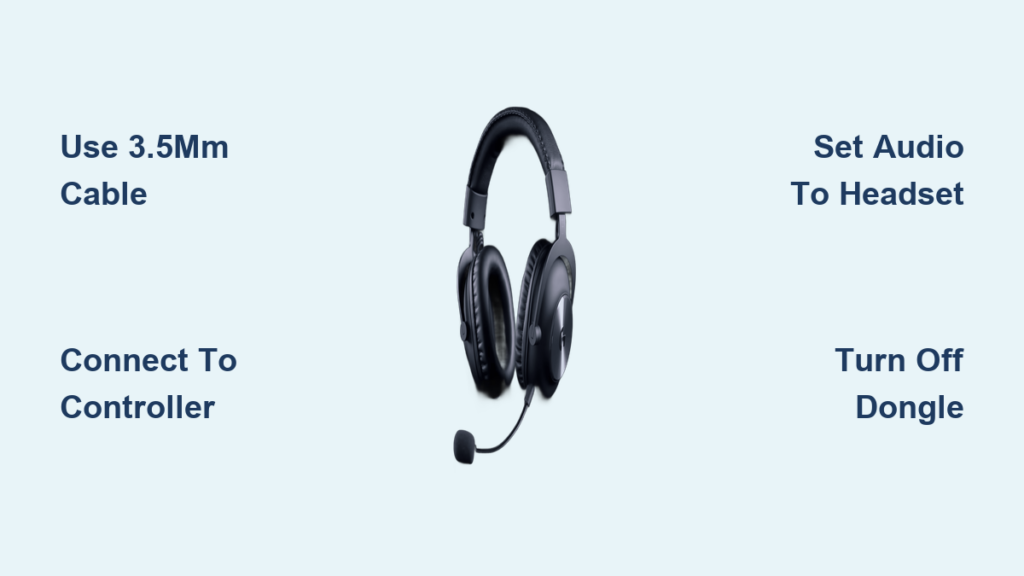
Your Logitech Pro X Wireless headset sits unconnected next to your Xbox Series X, and that USB dongle you’ve been trying to plug in just won’t work. You’re not imagining things—this is a common frustration for Xbox gamers who invest in premium PC/PlayStation headsets. Unlike PlayStation consoles, Xbox Series X|S and Xbox One don’t recognize standard USB audio adapters like Logitech’s Lightspeed wireless dongle. The good news? You don’t need to return your headset or buy a new one. There’s a simple, reliable wired solution that delivers perfect audio quality without latency issues. In this guide, you’ll discover exactly how to connect your Logitech Pro X Wireless to Xbox using the method that actually works, plus why wireless options fail and what your alternatives are for true wireless Xbox gaming.
Why Your Logitech Pro X Wireless USB Dongle Won’t Connect to Xbox

Xbox consoles operate on a closed wireless ecosystem that only recognizes officially licensed headsets using Microsoft’s proprietary Xbox Wireless protocol. When you plug the Logitech Pro X Wireless USB dongle into your Xbox, nothing happens because the console’s operating system actively blocks unrecognized USB audio devices. This isn’t a defect in your headset—it’s Microsoft’s deliberate design choice to maintain quality control over their audio experience.
The Technical Barrier: Xbox’s Restricted Audio Protocol
- Xbox Wireless Protocol Requirement: Only headsets with Microsoft’s specific wireless certification work wirelessly with Xbox consoles
- USB Audio Limitation: Xbox Series X|S and Xbox One support USB audio exclusively for licensed headsets (like Microsoft’s official headset or SteelSeries Arctis 9X)
- Bluetooth Restrictions: Xbox doesn’t support Bluetooth audio for game sound—only for chat on newer models with specific headsets
What Happens When You Try the USB Dongle Method
When you insert the Logitech Pro X Wireless USB dongle into your Xbox and press the pairing buttons, the console simply ignores the device. The headset might power on and show lights, but no audio transmission occurs. This isn’t a pairing failure—it’s the Xbox’s operating system rejecting the unrecognized hardware. Unlike PlayStation 5, which supports third-party USB audio devices, Xbox maintains strict compatibility requirements that exclude most PC-focused wireless headsets.
Direct Wired Connection: The Only Reliable Method for Pro X Wireless on Xbox
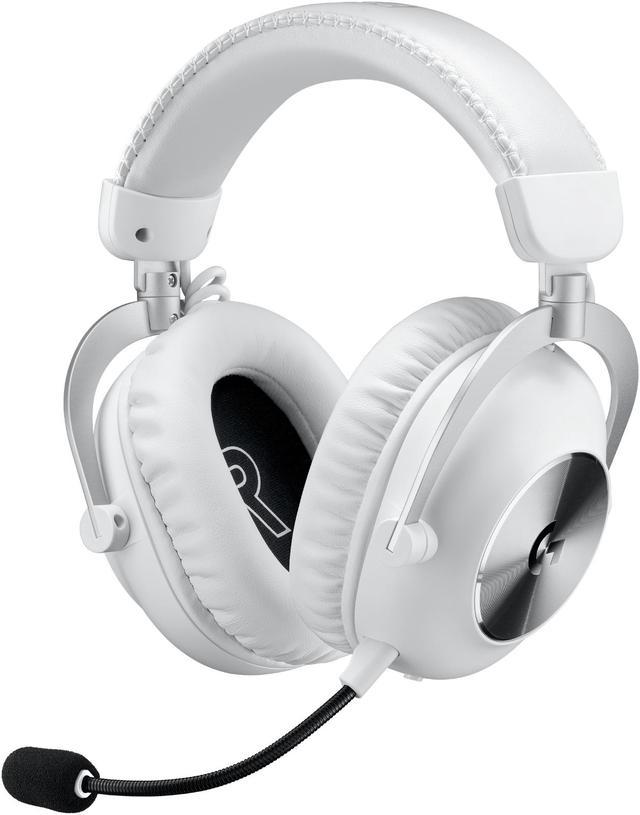
Forget wireless dongles or complicated workarounds—connecting your Logitech Pro X Wireless headset directly to your Xbox controller via 3.5mm cable delivers perfect audio quality with zero latency. This method bypasses Xbox’s wireless restrictions entirely by using the controller’s built-in audio system, which supports any standard 3.5mm headset.
Equipment Checklist for Successful Connection
- Logitech Pro X Wireless headset (with 3.5mm audio cable included)
- Xbox Series X|S or Xbox One controller with 3.5mm jack
- Fully charged headset (though controller provides power when connected)
Step-by-Step Controller Connection Process
- Power Down Your Headset: Turn off the Logitech Pro X Wireless to prevent connection conflicts
- Locate the Correct Ports: Identify the 3.5mm port on your Xbox controller (bottom edge) and the audio port on your Pro X Wireless headset (typically on the left earcup)
- Connect the 3.5mm Cable: Insert one end into your Xbox controller’s headphone jack and the other into your headset’s audio port
- Power Up the Headset: Turn on your Pro X Wireless—no USB connection needed
- Adjust Xbox Audio Settings: Press Xbox button > Profile & system > Settings > General > Volume & audio output
- Optimize Audio Configuration: Under “Headset audio,” select “Headset format” as “Stereo uncompressed” for best performance
Troubleshooting Common Wired Connection Issues
No Audio Through Headset?
Check your Xbox audio settings to ensure “Headset audio” is set to “On” and “Headset chat mixer” isn’t muted. Also verify the physical connection—sometimes the 3.5mm plug doesn’t seat fully in the controller jack.
Chat Audio Working But No Game Sound?
Navigate to Settings > General > Volume & audio output > Additional options and confirm “Audio output” is set to “Headset” rather than “TV speakers.”
Headset Not Powering On?
Your Pro X Wireless requires battery power even when connected via cable. Charge the headset for 15 minutes if the battery is completely depleted.
Why Wireless Connection Methods Fail with Xbox
Understanding why certain connection methods don’t work helps avoid wasted time and frustration. The Logitech Pro X Wireless was engineered primarily for PC and PlayStation ecosystems, which have more open audio protocols than Xbox.
USB Dongle Limitations Explained
Microsoft’s Xbox operating system contains a whitelist of approved USB audio devices. The Logitech Pro X Wireless USB dongle uses standard USB audio class drivers that Xbox deliberately ignores unless the device appears on Microsoft’s certified list. This isn’t a technical limitation—it’s a strategic decision by Microsoft to control the audio experience on their platform.
Bluetooth Connection Reality Check
While some newer Xbox models support Bluetooth for chat audio with specific headsets, they don’t transmit game audio over Bluetooth. Even if your Pro X Wireless pairs for chat, you’ll miss critical game sounds like footsteps or environmental cues. The Bluetooth implementation on Xbox is intentionally limited to prevent audio latency issues during gameplay.
Advanced Workaround: PC Audio Bridge (Not Recommended)

For technically advanced users willing to accept significant compromises, a PC-based audio bridge offers theoretical wireless capability—but with major drawbacks that make it impractical for most gamers.
Audio Routing Setup Requirements
- Gaming PC connected to the same network as your Xbox
- Audio routing software like VoiceMeeter Banana or OBS Studio
- Network audio transmission tools such as SoundWire
Setup Process Overview
- Connect Xbox to PC via HDMI or network streaming
- Configure audio routing software to capture Xbox audio output
- Transmit audio from PC to Logitech Pro X Wireless via its USB dongle
- Manage bidirectional chat audio separately
Critical Limitations You Must Consider
- Noticeable Audio Delay: 150-300ms latency makes competitive gaming impossible
- Audio Quality Degradation: Compression artifacts affect spatial audio cues
- Complex Setup Process: Requires technical knowledge of audio routing
- Continuous PC Requirement: PC must remain on during all Xbox sessions
- Chat Audio Complications: Separate configuration needed for party chat
This method transforms your gaming setup into an audio engineering project with marginal benefits. The latency alone renders it unusable for any competitive or rhythm-based gaming.
Officially Compatible Xbox Wireless Headsets
If true wireless freedom is essential for your Xbox experience, these officially licensed headsets connect directly to your console without dongles or cables:
Top Xbox Wireless Certified Options
- Microsoft Xbox Wireless Headset: Native integration, chat/game balance dial, USB-C charging
- SteelSeries Arctis 9X: Dual wireless (Xbox + Bluetooth), long battery life, swappable batteries
- Razer Kaira Pro: Xbox Wireless + Bluetooth, THX audio, comfortable fit for extended sessions
- Turtle Beach Recon 500: Budget-friendly official Xbox Wireless headset
These headsets connect to your Xbox like additional controllers—simply press the pairing button on the console and headset. No USB dongles required, and they support all Xbox audio features including spatial sound formats.
Why the Wired Method Outperforms Wireless Alternatives for Pro X Wireless
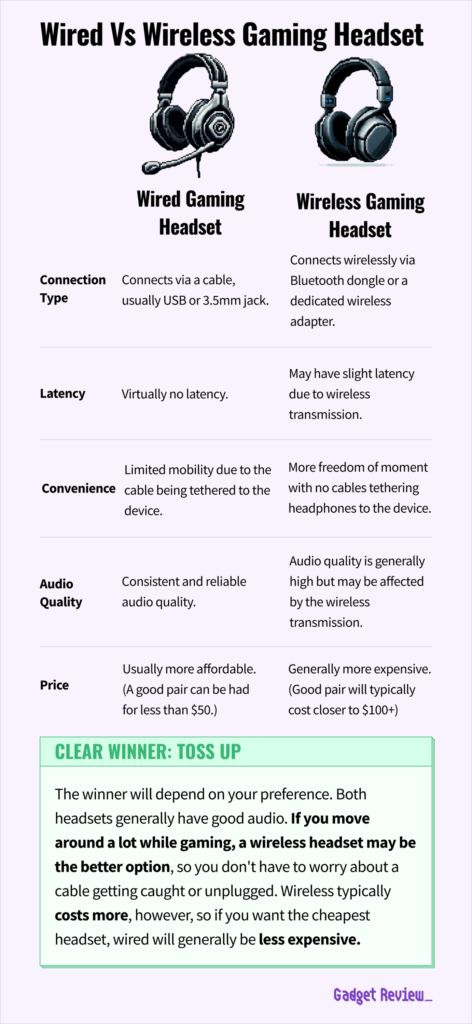
Connecting your Logitech Pro X Wireless via 3.5mm cable delivers superior performance compared to unreliable wireless workarounds:
Audio Quality Comparison
- Wired Connection: Full bandwidth, uncompressed stereo audio (up to 24-bit/48kHz)
- Wireless Workaround: Compressed audio with potential dropouts and latency
- Official Xbox Wireless: Good quality but with intentional compression for latency management
Practical Advantages You’ll Experience Immediately
- Zero Input Lag: Critical for competitive gaming where milliseconds matter
- No Battery Anxiety: Controller powers the headset during use (though internal battery still needed)
- Simplified Setup: One cable connection versus complex multi-device configurations
- Full Feature Access: All headset controls and microphone functionality work immediately
Real-World Gaming Impact
In fast-paced shooters like Call of Duty or competitive titles like Rocket League, audio synchronization is critical. The wired connection ensures footsteps, reload sounds, and environmental cues reach your ears precisely when they occur in-game—something no wireless workaround can guarantee with Xbox.
Final Recommendation: Embrace the Wired Connection
Your Logitech Pro X Wireless headset delivers exceptional audio quality that deserves proper utilization with your Xbox. While the lack of native wireless support is frustrating, the wired connection method actually provides superior gaming performance with zero latency and perfect reliability. You’ll experience the headset’s full audio capabilities without the signal drops, battery concerns, or setup headaches of wireless alternatives.
For the best experience, keep your Pro X Wireless charged and use the included 3.5mm cable whenever gaming on Xbox. If true wireless freedom is non-negotiable for your Xbox sessions, consider supplementing with an officially licensed Xbox Wireless headset while continuing to use your Pro X Wireless for PC and PlayStation gaming. This dual-headset approach gives you the best of both worlds—premium audio quality where it matters most.
Remember that Logitech designed the Pro X Wireless primarily for PC and PlayStation ecosystems where USB audio is universally supported. Rather than fighting Xbox’s closed system, work with its strengths by using the controller’s audio jack—the solution Microsoft themselves designed for non-wireless headsets. You’ll spend less time troubleshooting and more time enjoying your games with crystal-clear audio exactly as the developers intended.