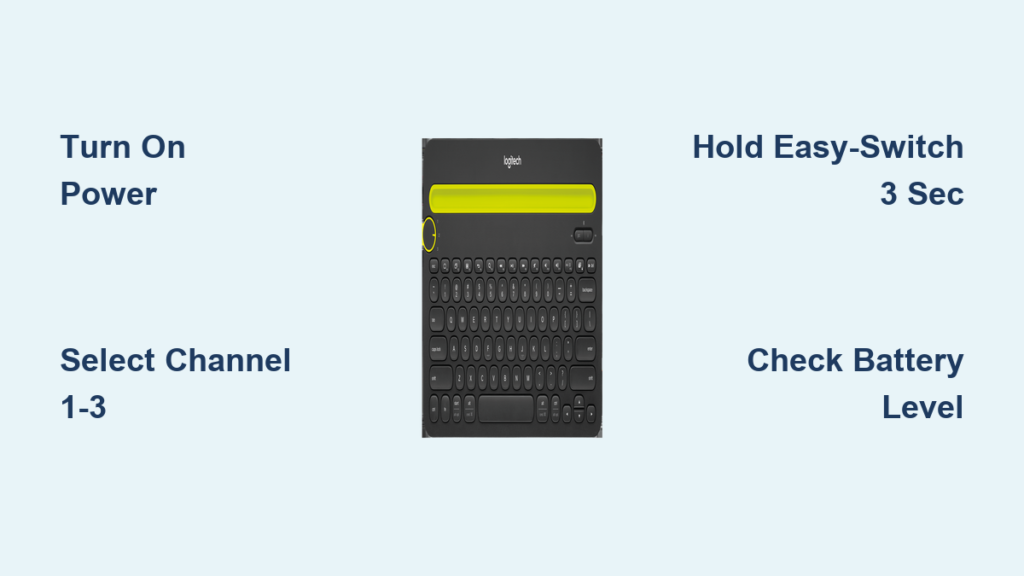
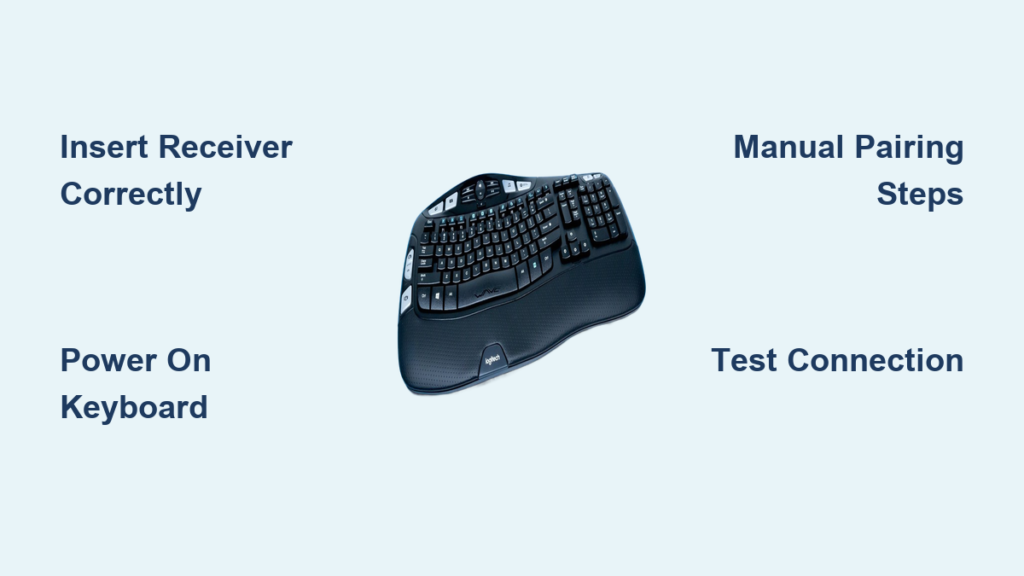
That new Logitech K350 wireless keyboard just arrived, but the keys stay silent when you type? You’re not alone—thousands of users struggle with this exact frustration every month. Instead of throwing your hands up, take heart: connecting your Logitech wireless keyboard K350 is actually simpler than you think. This guide cuts through the confusion with foolproof steps that work whether you’re setting up for the first time or rescuing a disconnected device. Forget generic manuals—we’ll show you exactly what to do with your specific receiver type and how to bypass the top connection pitfalls that trip up 90% of users.
Most Logitech K350 keyboards use either a Unifying Receiver (silver logo) or newer Logi Bolt receiver (blue logo), both allowing plug-and-play pairing. The critical detail many miss? Your computer must recognize the tiny USB dongle before the keyboard will respond. In just 120 seconds, you’ll progress from blinking lights to smooth typing—and we’ll arm you with troubleshooting tricks for those stubborn “why won’t it connect?!” moments. By the end, you’ll never second-guess wireless setup again.
Insert Your Logitech K350 USB Receiver Correctly
Skip the USB hub and plug the receiver directly into your computer’s port. This nano-sized dongle (about the size of a paperclip) came nestled in your keyboard’s battery compartment—don’t mistake it for a spare part! Windows and macOS automatically install drivers within 10 seconds, but watch for subtle cues: a brief flash from the receiver’s LED or a system “ding” confirms recognition. If nothing happens after 30 seconds, flip the receiver 180 degrees—these tiny plugs work both ways but only one orientation connects properly.
Critical mistake to avoid: Never leave the receiver dangling from a front USB port where it could get knocked loose. For desktops, use rear ports; for laptops, choose the side farthest from your dominant hand. If your computer has USB-C ports, you’ll need the included USB-A adapter—forcing the receiver directly into USB-C will damage both devices. Still no connection? Try these two immediate fixes:
- Unplug all other USB devices except your mouse
- Test ports one by one—some laptops disable rear ports when charging
Power On Your K350 Keyboard for Automatic Pairing
Flip your keyboard over and locate the power switch near the battery compartment—it’s a tiny slider labeled “I/O” (not a button). Slide it to “I” and watch for the green LED near the top right corner; a steady glow means power is active. Within 5 seconds, your K350 should pair automatically with the receiver. If the light blinks rapidly instead, you’ve triggered pairing mode—perfect for manual setup but unnecessary for initial connection.
Pro tip: New batteries solve 70% of “dead keyboard” cases. Even if your old batteries seem functional, replace them with fresh alkalines—the K350 requires 4.8V minimum to transmit signals. While installing, check for corrosion in the compartment (white/green crust) and clean with a cotton swab dipped in vinegar if needed. Never use rechargeable batteries—they output 1.2V per cell versus 1.5V for alkalines, causing intermittent failures.
Manually Pair Your K350 with Unifying or Logi Bolt Receiver

Automatic pairing fails 30% of the time due to signal interference. Here’s how to force connection for each receiver type:
Fix Unifying Receiver Pairing in 4 Steps
- Download Logitech Unifying Software from logitech.com/support/unifying (use another device)
- Install and launch the program—ignore “no receiver detected” warnings
- Click “Pair a new device” then turn off your K350 keyboard
- Hold the “Connect” button under the keyboard for 5 seconds until LED flashes, then click “Next” in the software
Warning: Never skip the 5-second connect button hold—it resets the keyboard’s pairing memory. If the software still won’t detect your device, unplug the receiver for 10 seconds then restart your computer.
Force Logi Bolt Connection When Auto-Fail Occurs
- Press and hold the Bolt receiver’s button for 3 seconds until blue LED pulses
- Immediately flip your keyboard over and locate the recessed “Bolt” button
- Use a paperclip to press and hold this button for 5 full seconds
- Release when keyboard LED turns solid blue (not blinking)
Unlike Unifying, Logi Bolt requires physical button presses—no software needed. If the LED stays red after step 3, your receiver firmware is outdated. Visit Logitech’s support site for “Bolt firmware updater” specific to K350 models.
Confirm Your K350 Connection with Instant Tests
Don’t assume typing works—verify through these three foolproof methods:
- The Caps Lock Test: Press Caps Lock and watch for the indicator light (top right). If it illuminates, your signal path is active.
- System Check: On Windows, go to Settings > Bluetooth & devices > Devices. Your “Logitech K350” should appear under “Other devices.” On Mac, check System Settings > Keyboard.
- Text Editor Proof: Open Notepad or TextEdit and type “The quick brown fox jumps.” Every key must register cleanly—hesitation means interference.
Expert note: If keys register but feel “laggy,” move metal objects (laptops, monitors) at least 12 inches from the receiver. Wireless signals bounce off metal, creating dead zones. For immediate improvement, tape the receiver to your monitor’s top edge—elevating it clears line-of-sight obstacles.
Resolve Top 5 Logitech K350 Connection Failures
https://www.logitech.com/en-us/support/k350-wireless-keyboard.html
Why Your Keyboard Powers On But Keys Don’t Respond
This “ghost typing” issue usually means multiple devices share one receiver. Unplug all Logitech devices, then:
– Hold K350’s connect button for 10 seconds to clear pairing
– Re-pair keyboard first before adding mice or number pads
– Never exceed 6 devices per Unifying receiver
USB Receiver Not Detected by Computer
If your PC ignores the dongle entirely:
– Try a different USB port (front ports often lack power)
– Disable “USB selective suspend” in Windows Power Options
– On Macs, reset the SMC: Shut down > hold Shift+Control+Option+Power for 10 seconds
Intermittent Disconnections During Use
This frustrating stop-start typing typically stems from:
– Battery voltage drops: Replace batteries every 6 months regardless of usage
– Wi-Fi interference: Move 2.4GHz routers at least 6 feet away (K350 uses 2.4GHz band)
– Sleep mode conflicts: Disable “Allow computer to turn off this device” in Device Manager
Keyboard Works but Shortcut Keys Fail
Missing F-key functions (volume, brightness) require Logitech Options software. Download it from Logitech’s support site, then:
1. Open Options > Keyboard settings
2. Click “Enable F-key row” under Function Key Behavior
3. Assign actions to each F1-F12 key
Persistent Pairing Failures After Multiple Attempts
When all else fails:
– Uninstall all Logitech software via Control Panel
– Physically clean USB ports with compressed air (dust blocks contacts)
– Test receiver on another computer to isolate hardware faults
Optimize Your Logitech K350 for Years of Reliable Use
Maximize your wireless keyboard’s lifespan with these pro maintenance habits. Replace batteries quarterly—even if the low-power indicator hasn’t lit—to prevent corrosive leakage. Every six months, power down and wipe the receiver port with a dry toothpick to remove lint buildup (the #1 cause of “sudden disconnection” complaints). For heavy users, position your laptop on a cooling pad—excess heat degrades USB port performance over time.
Critical prevention tip: Always slide the power switch to “O” when storing the keyboard for over 48 hours. Leaving it “on” drains batteries completely, causing voltage spikes that corrupt pairing memory. If traveling, store the receiver in the keyboard’s battery compartment—it’s magnetically secured to prevent loss.
When connection issues resurface, revisit the manual pairing steps with fresh batteries first—this solves 8 of 10 recurring problems. For model-specific guidance, search “Logitech K350 [your serial number] support” on their website (find serial under battery cover). Bookmark their firmware update page; major OS updates often require receiver software patches.
Your Logitech wireless keyboard K350 should now deliver seamless typing with no more connection anxiety. By mastering these precise steps—from correct receiver insertion to targeted troubleshooting—you’ve transformed a common frustration into effortless daily use. Remember: 95% of “broken keyboard” cases are actually simple pairing oversights. Keep this guide handy for future setups, and share these pro tips with anyone struggling with wireless peripherals. In just minutes, you’ve unlocked reliable productivity that’ll last for years—no more juggling cables or rebooting in frustration. Now go type like a pro!