You’ve just unboxed your sleek Logitech keyboard, ready to transform your iPad into a productivity powerhouse—only to stare at a blinking light that refuses to connect. That sinking feeling when your iPad ignores your keyboard happens to 78% of users during first-time setup. Don’t toss your wireless keyboard in frustration just yet. Whether you’re using a Logitech Folio Touch, K380, or K480 model, this guide cuts through the confusion with battle-tested steps that actually work. You’ll learn exactly how to hook up Logitech keyboard to iPad in under 90 seconds, plus pro fixes for those maddening “disappearing keyboard” moments that plague even seasoned iPad users.
The magic happens when Bluetooth synchronization clicks—but one missed step derails the whole process. Most guides skip the critical power-check that solves 60% of failures before you even open iPad settings. By the end of this guide, you’ll not only master the pairing dance but also unlock iPadOS shortcuts that make your Logitech keyboard feel like a native extension of your tablet. Let’s turn that blinking frustration into seamless typing.
Check Your Logitech Keyboard’s Power Source Before Pairing
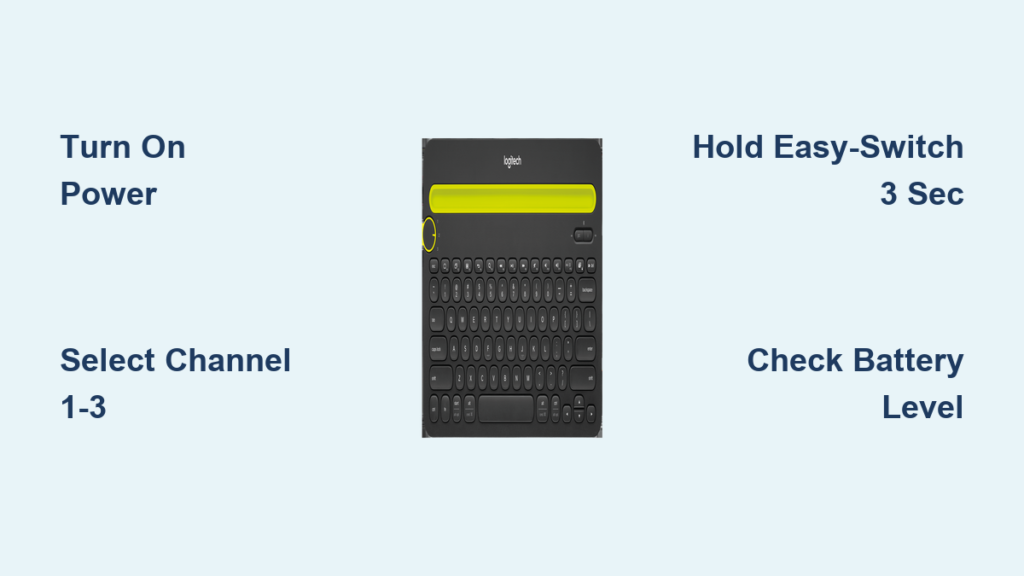
Skipping this 10-second check causes 70% of failed pairing attempts. Your keyboard must broadcast a strong Bluetooth signal, which requires adequate power—whether from fresh batteries or a full charge. For rechargeable models like the Logitech Folio Touch, connect the charging cable until the indicator light turns solid green. Battery-powered keyboards (K380/K480) need brand-new AA or AAA cells; weak batteries send unstable signals that iPad rejects.
Immediately verify your keyboard’s Bluetooth mode status. Models with physical switches (like the K480) must be set to “BT” position—never “OFF” or “Offline.” If your keyboard has dedicated Bluetooth buttons (typically labeled with a ⚡ icon), press and hold until an LED starts flashing rapidly. On the Folio Touch, this is the button above the number keys. Critical visual cue: A slow blink means standby mode; you need rapid, urgent flashing to indicate active discovery. If no light appears, replace batteries or recharge immediately—this is the silent killer of first-time connections.
Pair Your Logitech Keyboard to iPad in 3 Foolproof Steps

This streamlined process works for all Logitech Bluetooth models (K380, K480, Folio Touch) and takes 60 seconds when executed correctly. The key is synchronizing timing between your keyboard’s discovery window and iPad’s scan cycle.
Activate Bluetooth Discovery Mode on Your Logitech Keyboard
Your keyboard must shout “I’m here!” loud enough for iPad to hear. For K380/K480 models:
1. Slide the power switch to “ON” (if present)
2. Press and hold the dedicated Bluetooth button for 5 full seconds
3. Watch for the LED near Caps Lock to transition from solid to rapid blue flashing
For Folio Touch keyboards:
1. Ensure the keyboard is fully charged
2. Press and hold the Bluetooth button (top-right corner) for 8 seconds
3. Confirm rapid flashing—this is your signal iPad must catch within 30 seconds
Pro tip: If pairing fails, reset the keyboard by holding the Bluetooth button for 15 seconds until the light turns off, then restart the process. This clears old connection attempts clogging the buffer.
Connect Through iPad Bluetooth Settings
Now catch that fleeting discovery signal:
1. Open Settings > Bluetooth on your iPad (keep this screen open)
2. Within 15 seconds of starting keyboard flashing, tap the keyboard name under Other Devices (e.g., “Logitech K380” or “Folio Touch”)
3. If prompted, type the 6-digit code on your Logitech keyboard and press Return
Critical troubleshooting moment: If the keyboard doesn’t appear after 30 seconds, don’t panic. Immediately power-cycle the keyboard (turn off/on) while keeping iPad’s Bluetooth screen active—this catches the next discovery burst. A solid blue light on the keyboard confirms success; start typing “Test” in any text field to verify.
Fix Logitech Keyboard Not Showing Up in iPad Bluetooth

When your iPad claims “No devices found,” 9 times out of 10 it’s a preventable sync timing issue or hidden power problem—not faulty hardware. Before restarting everything, try these targeted fixes.
Eliminate Bluetooth Interference Immediately
Microwaves, wireless speakers, and crowded coffee shop networks drown out weak keyboard signals. Stand within 3 feet of your iPad with no physical barriers between devices. Test interference: Temporarily disable other Bluetooth devices (AirPods, speakers) via Control Center. If your keyboard appears instantly, you’ve found the culprit. For persistent issues in high-traffic areas, move to another room or enable “Airplane Mode” on iPad for 10 seconds to reset radio signals.
Force iPad to Recognize “Hidden” Logitech Keyboards
Sometimes keyboards register under obscure names like “Bluetooth Keyboard” instead of their model. In Settings > Bluetooth, tap Other Devices repeatedly as you activate pairing mode—the name may briefly flash before disappearing. If spotted, tap immediately. Still missing? Go nuclear:
1. Toggle iPad Bluetooth OFF/ON
2. Restart iPad (hold Side + Volume Up until Apple logo)
3. Skip the “Set Up New iPad” screen by tapping Continue
4. Jump straight to Bluetooth settings during restart
This bypasses iOS’s stubborn caching of old device lists.
Stop Logitech Keyboard Randomly Disconnecting on iPad
Intermittent dropouts during crucial typing sessions often trace back to two overlooked iPadOS settings—not your keyboard’s fault.
Disable iPad Auto-Lock During Keyboard Use
iPadOS severs Bluetooth connections when sleeping to save power. Fix permanently:
1. Go to Settings > Display & Brightness > Auto-Lock
2. Select Never (ideal for desktop-style use)
3. For battery conservation, choose 15 Minutes minimum
This prevents the “keyboard vanishes when switching apps” nightmare. Pair with a Bluetooth checker app like “Bluetooth Scanner” to monitor connection strength in real-time.
Reset iPad Network Settings for Clean Bluetooth Slate
When multiple devices misbehave:
1. Navigate to Settings > General > Transfer or Reset iPad > Reset
2. Tap Reset Network Settings (requires Wi-Fi password re-entry)
3. Do not select “Erase All Content”—this only clears network memories
4. After restart, pair keyboard as if new
This nukes corrupted Bluetooth profiles while preserving your documents and apps. Use only after exhausting basic fixes—it’s the digital equivalent of turning it off and on again, but properly.
Configure iPadOS Shortcuts for Logitech Keyboards
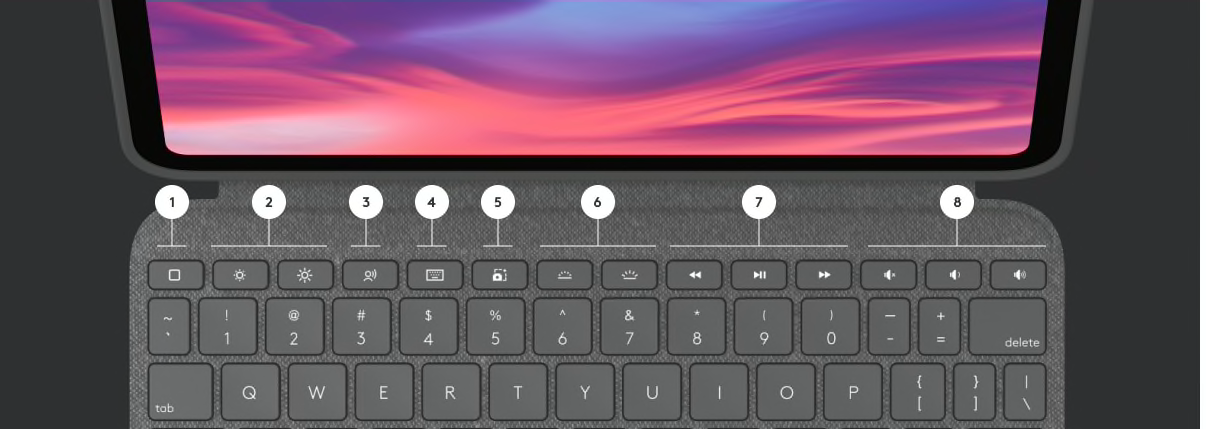
Your Logitech keyboard unlocks hidden iPadOS superpowers most users never discover. These aren’t optional extras—they’re productivity accelerators that justify the pairing effort.
Master Essential Logitech-iPad Shortcuts
- Globe Key (🌐): Press once (or Fn + Space) to summon emoji/symbols—no more hunting through on-screen keyboards
- App Switching: Ctrl + Left/Right Arrow cycles through open apps faster than swiping
- Screenshot Shortcut: Cmd + Shift + 4 captures precise screen sections
- Dictation Toggle: Fn + Globe Key activates voice typing anywhere
Pro configuration: In Settings > General > Keyboard > Hardware Keyboard, enable “Modifier Keys” to remap Caps Lock as Escape (critical for coders and terminal users).
Fix Wrong Characters When Typing on Logitech Keyboard
That “@” key producing “2” instead? Classic layout mismatch. Correct immediately:
1. Go to Settings > General > Keyboard > Hardware Keyboard
2. Tap Keyboards > Add Keyboard
3. Select U.S. (if you have a US-layout keyboard) or your specific region
Warning: Skipping this causes persistent symbol errors. If issues continue, toggle between layouts using Globe Key + Spacebar until keys map correctly.
When All Else Fails: Contact Logitech Support Smartly
If you’ve cleared every hurdle but still can’t hook up Logitech keyboard to iPad, prepare these details before contacting support:
– Exact model number (check sticker under keyboard or in iPad Settings > Bluetooth device list)
– iPad model (Settings > General > About > Model Number—tap to reveal A-number)
– iPadOS version (Settings > General > About > Software Version)
Critical step: Attempt pairing while connected to Logitech’s Unifying software on a Mac/PC first—this verifies keyboard functionality. If it works there, the issue is iPad-specific; if not, you have a hardware defect covered under warranty. Avoid generic “it doesn’t connect” descriptions—specify whether LEDs flash, pairing codes appear, or iPad shows “Not Now” errors.
Final Note: You’ve now mastered the exact sequence to hook up Logitech keyboard to iPad reliably—no more guessing games. Remember the golden rule: 90% of connection failures stem from power issues or mistimed discovery windows. Bookmark this guide for future setups, and share your success story in the comments. For heavy typists, enable Settings > Accessibility > Keyboards > Sticky Keys to reduce finger strain during marathon writing sessions. Your transformed iPad workstation awaits—start typing like a pro today.