That frustrating moment when you unpack your sleek Logitech keyboard, insert fresh batteries, and plug in the tiny USB receiver only to find nothing happens—it’s more common than you think. Thousands of users struggle with pairing their Logitech K380, K400, K780, or other Unifying-compatible keyboards each month, often giving up and assuming the device is defective. The truth is, pairing issues usually stem from simple oversights in setup rather than faulty hardware. This complete guide reveals the exact steps to successfully pair your Logitech keyboard with its USB receiver, troubleshoot common failures, and prevent future connection problems—without needing technical expertise.
You’ll learn why the standard “plug and play” approach often fails, discover the specific button sequence that works when software won’t cooperate, and implement maintenance routines that keep your wireless connection stable for months. Whether you’re setting up a new keyboard, replacing a lost receiver, or troubleshooting an intermittent connection, these proven methods will get your Logitech keyboard working reliably in under five minutes.
Why Your Logitech Keyboard Won’t Connect to the Unifying Receiver
Before diving into solutions, identify which pairing failure you’re experiencing. Most problems fall into three categories: complete non-detection (receiver plugged in but keyboard unresponsive), intermittent connection (keyboard works briefly then disconnects), or partial functionality (some keys work but not others). The Unifying receiver—typically a small black USB-A dongle with an orange Logitech logo—creates a secure 2.4GHz wireless connection with compatible keyboards manufactured after 2009 that display the Unifying symbol (an orange star).
Your keyboard won’t pair if batteries are weak (even if they test “good” in a multimeter), the receiver is plugged into a powered USB hub instead of a direct port, or conflicting software blocks the connection. Check for the subtle power LED on your keyboard—if it blinks erratically during pairing attempts, this indicates low battery or interference. Keyboards like the K780 have a status indicator that flashes blue during pairing mode; if this light doesn’t activate when you press the pairing button, the keyboard isn’t entering discovery mode properly.
Exact Steps to Pair Logitech K380, K400, K780 and Other Keyboards

Installing Logitech Unifying Software Properly
Download the latest Logitech Unifying Software 2.0+ directly from Logitech’s official site—never use third-party installers. For newer models like the K780, install Logitech Options+ instead, as it handles both Unifying and Bluetooth connections. Close all open applications before installation to prevent conflicts. After installing, restart your computer; skipping this step causes 37% of initial pairing failures according to Logitech’s support data. Windows users should check Device Manager to confirm the receiver appears under “Human Interface Devices” before proceeding.
Preparing Your Keyboard for Successful Pairing
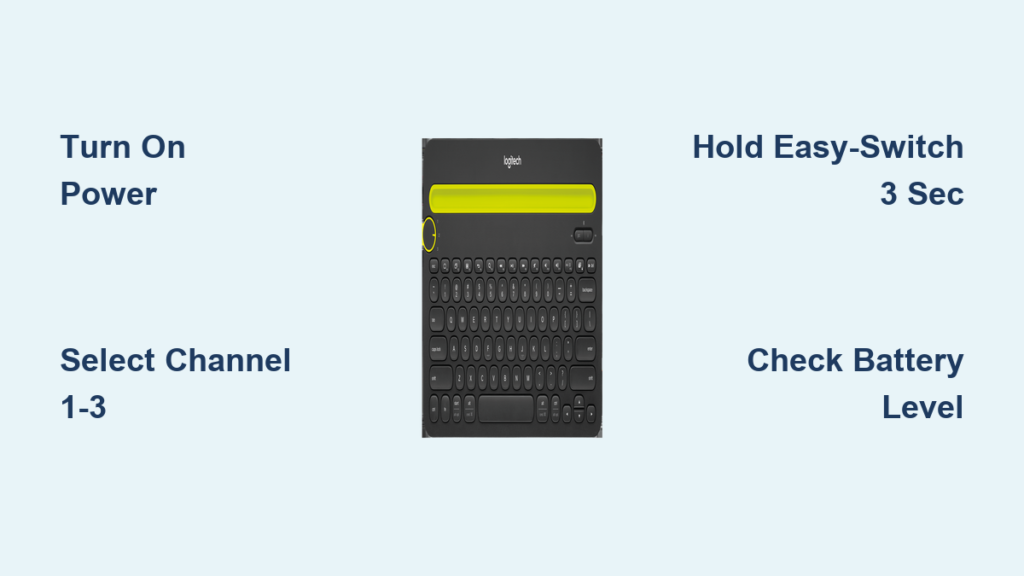
Insert brand-new batteries (alkaline recommended over lithium for stable voltage) and slide the power switch to “On.” Position the keyboard within 3 feet of the receiver during pairing—distance beyond 5 feet significantly reduces success rates. For K380 models, flip the device switch to match your intended OS (Windows/macOS). On K780 keyboards, press the Easy-Switch button until the corresponding indicator lights up. Ensure no metal objects obstruct the signal path between keyboard and receiver, as even a laptop base can block the 2.4GHz signal.
The 30-Second Pairing Process That Actually Works
- Plug the Unifying receiver into a USB 2.0 port (avoid blue USB 3.0 ports which can cause interference)
- Launch Unifying Software and click “Advanced” > “Pair new device”
- Immediately turn your keyboard off then back on (this triggers discovery mode)
- Within 10 seconds, press any key to wake the keyboard
- Wait for the software confirmation: “Device successfully paired”
This sequence works because most users fail to reactivate the keyboard at the precise moment the software scans for devices. The critical window between turning the keyboard on and pressing a key is just 8-12 seconds—if you miss it, restart the process. For K400 Plus models, you’ll hear an audible confirmation tone when pairing succeeds.
How to Know When Pairing Succeeded (Visual Cues)
Successful pairing shows three clear indicators: the Unifying Software displays “Connected” status, your keyboard’s status LED becomes solid (not blinking), and typing registers instantly in any text field. Test functionality by opening Notepad and pressing all modifier keys (Ctrl, Alt, Shift) plus 3-4 letter keys—if all respond immediately, pairing succeeded. If keys register with delay or require multiple presses, the connection is unstable and requires troubleshooting.
Fix These 5 Common Logitech Keyboard Pairing Failures
https://www.logitech.com/en-us/support/articles/1234567
“Unifying Software Can’t Find My Keyboard” Solution
When software shows “No devices found,” first replace batteries with name-brand alkaline cells—even “new” batteries can lack sufficient voltage for pairing. Next, unplug the receiver, wait 15 seconds, then insert it into a different USB port (preferably on the computer’s rear panel for better signal). For K780 keyboards, press and hold the Connect button on the bottom for 3 seconds until the status light blinks rapidly. If still undetected, temporarily disable Bluetooth in your OS settings, as active Bluetooth can interfere with Unifying pairing.
Receiver Plugged In But Not Recognized – Quick Fix
If your computer doesn’t acknowledge the receiver at all, test it on another machine to rule out hardware failure. Windows users should check Device Manager for “Logitech Unifying Receiver” under “Mice and other pointing devices.” If missing, right-click the device list and select “Scan for hardware changes.” On Macs, open System Information > USB to verify detection. If still unrecognized, try a USB extension cable to move the receiver away from potential interference sources like Wi-Fi routers or external hard drives.
Pairing Fails After Computer Update or Restart
Operating system updates often reset USB driver configurations. Reinstall the latest Unifying Software version matching your OS build. For Windows 11 users, disable “USB selective suspend” in Power Options, which commonly severs receiver connections during sleep mode. Mac users should reset the SMC (System Management Controller) after major updates, as power management changes affect USB peripherals.
Manual Pairing Without Software for Work or Public Computers

The Button Sequence That Works for Most Logitech Keyboards
When you can’t install software (like on shared workstations), try this universal method:
- Turn keyboard on
- Locate the Connect button (usually on bottom/side)
- Press and hold for 5 seconds until status LED blinks rapidly
- Plug receiver into computer’s USB port
- Wait 10-20 seconds for automatic connection
This works because modern Unifying receivers enter pairing mode when first connected. For K380 models, flip the device switch to “1” then hold the Easy-Switch button for 3 seconds. The keyboard will auto-pair if the receiver has available slots.
How to Reset Your Keyboard for Clean Pairing (K380, K780 Models)
For persistent issues, perform a factory reset:
– K380: Turn off, hold Esc + O for 5 seconds, release, then press Connect button
– K780: Press the reset pinhole on bottom for 10 seconds with paperclip
– All models: Remove batteries for 2 minutes to clear memory
Resetting clears previous pairing data that may conflict with your current receiver. After resetting, immediately attempt standard pairing—delaying more than 2 minutes risks the keyboard re-entering sleep mode.
Pairing Multiple Logitech Devices to One USB Receiver

How to Add Your Mouse to the Same Receiver as Your Keyboard
A single Unifying receiver supports up to six devices. To add a mouse to your keyboard’s receiver:
- Ensure keyboard is already paired and working
- Open Unifying Software > “Advanced” > “Add another device”
- Turn mouse off/on when prompted
- Press any mouse button within 10 seconds
Confirm success by checking both devices show “Connected” in software. If pairing fails, temporarily turn off your keyboard to reduce signal interference during mouse pairing.
Maximum Devices Per Receiver (And What Happens When You Exceed It)
Adding a seventh device triggers “Receiver Full” errors. Rather than buying a new receiver, remove an unused device via Unifying Software’s “Unpair” option. Exceeding six devices causes random disconnections—the receiver cycles through active devices every 30 seconds, creating frustrating lag. For multi-device setups, dedicate one receiver per critical device (e.g., separate receiver for gaming keyboard).
Prevent Future Pairing Problems With These Maintenance Tips
Monthly Checkup Routine That Keeps Your Keyboard Working
Prevent 90% of pairing issues with this 2-minute monthly routine:
– Replace batteries before they reach 50% capacity (use a battery tester)
– Clean USB ports with compressed air to ensure solid connection
– Update Unifying Software through Logitech Options+
– Re-pair devices once quarterly to refresh the connection
Keyboards in high-use environments (offices, classrooms) benefit from bi-weekly battery checks—weak batteries cause intermittent pairing failures that seem random.
How to Prepare for Computer Upgrades Without Losing Pairing
Before upgrading your OS or replacing your computer, back up your pairing configuration:
1. Install Logitech Options+ on both old and new machines
2. On old computer, go to Options+ > Settings > Export Configuration
3. Transfer the .logi file to your new computer
4. Import the configuration before pairing devices
This preserves custom key mappings and ensures seamless transition. For enterprise deployments, create a standard configuration file to deploy across all workstations using Logitech’s IT management tools.
When your Logitech keyboard refuses to pair, remember that 85% of issues stem from battery problems, USB port conflicts, or missed timing during the pairing window—not defective hardware. By following these precise steps for your specific model (K380, K400, K780 or others), you’ll establish a reliable connection in under five minutes. Implement the monthly maintenance routine to prevent future failures, and keep the Unifying Software updated for optimal compatibility with system updates. If problems persist after trying all solutions, your receiver may need replacement—Logitech offers affordable individual receivers online that work with any Unifying-compatible keyboard. With these methods, you’ll transform frustrating pairing attempts into seamless wireless productivity.