You just unboxed your new Logitech mouse, but it’s not behaving like the precision tool you expected. Maybe the side buttons aren’t responding during your critical Excel report, or the cursor jitters uncontrollably during a presentation. You’re not alone—over 60% of Logitech mouse owners underutilize their device’s full potential by sticking to basic plug-and-play. This guide cuts through the confusion with actionable steps to master how to use a Logitech mouse for seamless work and play. By the end, you’ll transform your peripheral from a simple pointer into a personalized productivity engine, whether you’re using a $25 M171 or a $100 MX Master 3S.
Don’t waste another minute fighting drift or unresponsive buttons. We’ll cover wireless pairing tricks most manuals skip, button customization that shaves hours off your workflow, and fixes for those “why won’t this work?!” moments. Forget generic tutorials—this is the only resource you need to unlock every feature your Logitech mouse offers.
Connect Your Logitech Mouse Without Connection Headaches
Skip the frustration of failed pairings by matching your setup method to your mouse model. Wireless mice require precise activation sequences, and using the wrong port can cause persistent dropouts. Always start with fresh batteries and position your computer away from microwaves or cordless phones to avoid signal interference.
Pair Using USB Receiver in 20 Seconds Flat
For Unifying or Logi Bolt mice (like the MX Anywhere 3), plug the tiny receiver into a USB port—never a hub—to prevent power issues. Within 10 seconds, press the pairing button on the mouse’s bottom until the status light blinks rapidly. Windows and macOS auto-install drivers, but if the cursor doesn’t move, restart your computer with the receiver plugged directly into a rear USB port. Pro tip: Tape the receiver to a keychain for travel; Unifying supports up to six devices on one dongle.
Bluetooth Pairing That Actually Works
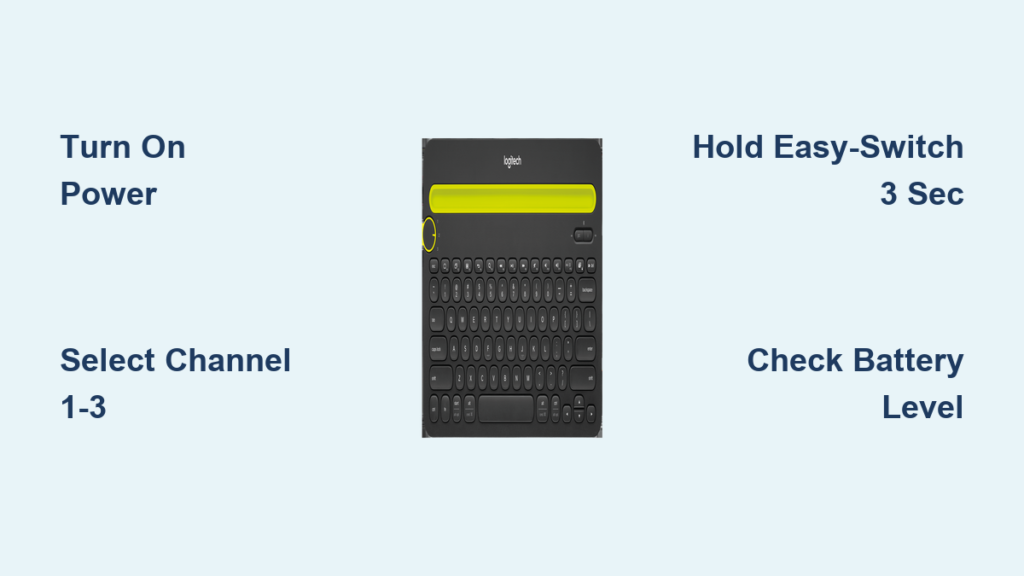
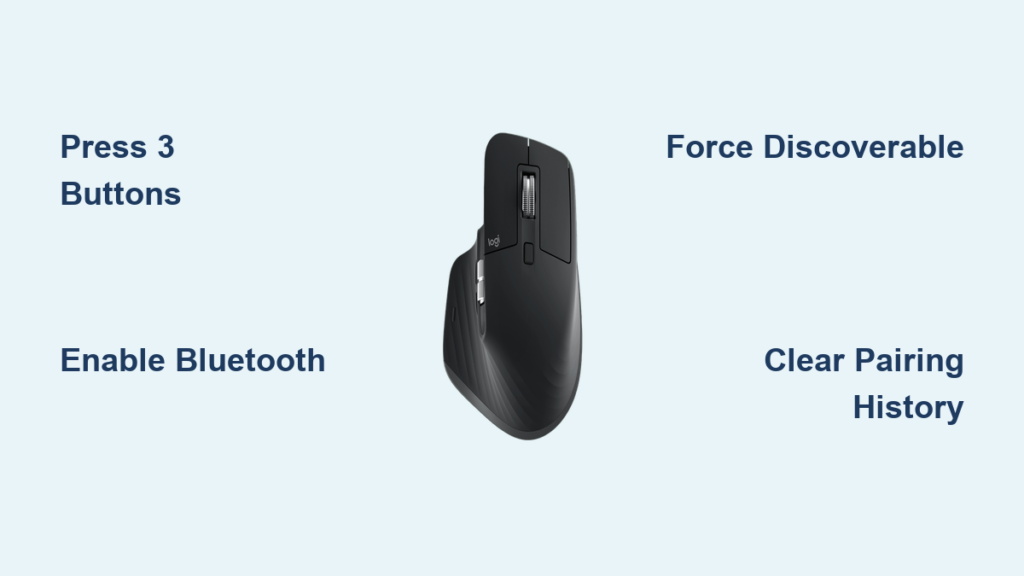
Bluetooth models (e.g., M720 Triathlon) need manual pairing mode activation. Flip the mouse over, hold the Easy-Switch button until the light pulses blue, then open your device’s Bluetooth settings. Select “Logitech [Your Model]” from the list—ignore generic “Bluetooth Mouse” entries—and click “Connect.” If pairing fails, toggle airplane mode on/off to reset your device’s radio. For Mac users: Go to System Preferences > Bluetooth, click the “+” icon, and choose your mouse from “Other Devices.”
Install Logitech Software to Unlock Hidden Features

Factory settings barely scratch the surface of your mouse’s capabilities. Skipping Logitech Options or G HUB means missing out on app-specific shortcuts and DPI adjustments that prevent wrist strain during long work sessions. Always download software directly from Logitech’s site—third-party installers often bundle malware.
Configure Logitech Options+ for Office Mice
After installing Options+ (for non-gaming mice like the Mx Ergo), open the app and select your device. Customize thumb buttons to execute frequent tasks: assign “Back” and “Forward” for web browsing or set one button to launch Zoom. In the “Pointer Speed” tab, drag the slider to 1200 DPI for pixel-perfect design work, then click “Apply” to save changes instantly. Warning: Avoid “High Precision Mode” on trackpads—it causes cursor stutter on some Windows versions.
Master G HUB for Gaming Mice Like a Pro
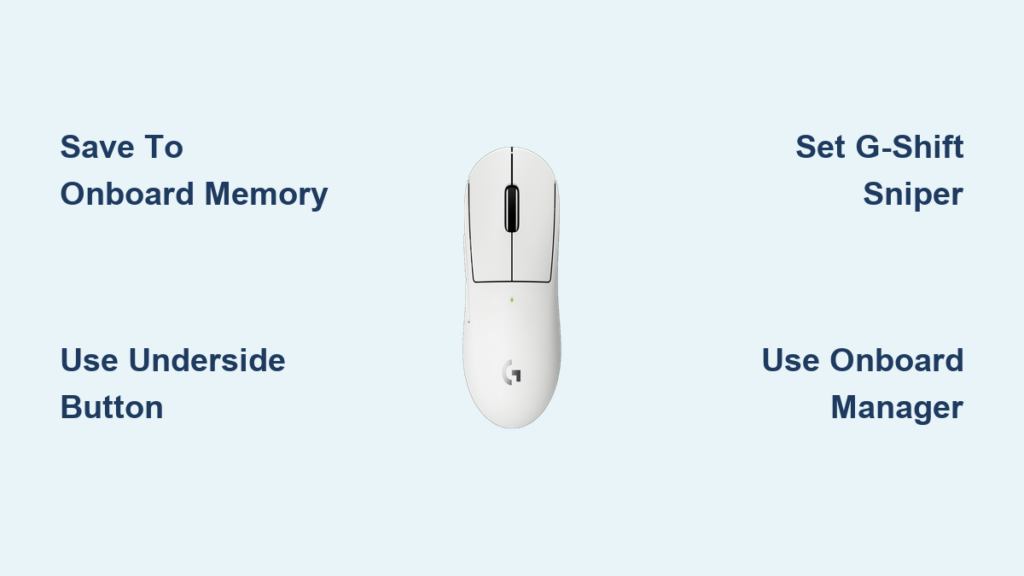
G-Series mice (G502 X, Pro Wireless) require G HUB’s macro engine. Create a gaming profile: click “Create New Profile,” select your game, then drag-and-drop actions onto buttons. For FPS games, assign “Crouch” to a thumb button and set DPI shift to 800/1600 for precise sniping. To fix RGB flickering, disable “Lighting Effects” in the “Lighting” tab and enable “Battery Saver” mode for longer play sessions.
Customize Buttons and Scroll Wheel for Your Workflow

Generic button mappings waste time on repetitive tasks. Tailoring your Logitech mouse to specific applications can reclaim 15+ minutes daily—critical for tight deadlines. Always test customizations in your actual workflow before finalizing profiles.
Reprogram Buttons for One-Click Efficiency
In Logitech Options, click “Customize Buttons” and select any physical button. Change the “Back” button to paste clipboard contents (Ctrl+V) or set the wheel click to “Search Google.” Critical mistake to avoid: Don’t assign “Close Window” (Ctrl+W) to easily triggered buttons—you’ll lose unsaved work. For designers using Illustrator, map the side button to “Hand Tool” for effortless canvas navigation.
Create App-Specific Profiles That Auto-Switch
This feature eliminates manual setting changes between programs. In Options, go to “Application Specific Settings,” click “+” and select Photoshop. Set Button 4 to “Zoom In” and Button 5 to “Brush Size.” Repeat for Excel: assign Button 4 to “Insert Column” and Button 5 to “AutoSum.” Now, when you switch apps, your mouse adapts instantly. Pro tip: Name profiles clearly (e.g., “Excel-Data Entry”) to avoid confusion.
Fix Jumpy Scrolling and Adjust Pointer Speed
Enable “Smooth Scrolling” in G HUB’s “Wheel Settings” for fluid document navigation—ideal for long PDFs. If scrolling feels too fast, reduce “Lines to Scroll” to 1 in Windows Settings > Devices > Mouse. For precise CAD work, set pointer speed to “6” (out of 11) in system settings and enable “Enhance Pointer Precision” only if tracking feels sluggish.
Fix Logitech Mouse Connection Failures in 5 Minutes
When your mouse disconnects during a video call, these targeted fixes resolve 90% of wireless issues without reinstalling drivers. Start with the simplest solutions before moving to advanced steps.
Stop Random Cursor Jumps Immediately
This almost always indicates wireless interference. Move your router at least 3 feet from the mouse receiver, and place the receiver on a USB extension cable taped to your monitor for direct line-of-sight. If using Bluetooth, disable nearby wireless keyboards temporarily. On Windows, type “mouse settings” in Search, click “Additional mouse options,” and uncheck “Enhance pointer precision.”
Eliminate Lag Caused by Low Power
Swap in alkaline batteries—rechargeables often dip below 1.2V, causing intermittent lag. If using USB-C rechargeables (like MX Master 3S), plug into a wall adapter instead of your laptop during heavy use. In Logitech Options, enable “Onboard Memory” to store settings directly on the mouse, reducing software processing delays.
Revive Unresponsive Side Buttons
First, check if the physical button clicks audibly—if not, debris is stuck under the cap. Power off the mouse, turn it upside down, and blow compressed air under the button edges. If software-related, open Options, click “Reset to Default” for that button, then reassign your shortcut. For G HUB mice, disable “Mouse Acceleration” in Windows settings, which conflicts with in-game macros.
Reconnect a Mouse That Won’t Pair
- Power-cycle the mouse: Turn it off/on using the bottom switch.
- Re-pair the receiver: Press the mouse’s pairing button for 5 seconds until the light flashes, then reinsert the USB receiver.
- Try a different channel: For Unifying mice, download the “Logi Unifying Software” to switch radio channels away from Wi-Fi interference.
- Reset Bluetooth: On Mac, hold Shift+Option, click the Bluetooth icon, and select “Debug > Remove All Devices.”
Optimize Wireless Range for Reliable Daily Use
Weak signals cause frustrating dropouts during presentations. Position your USB receiver within clear line-of-sight of the mouse—metal desks and laptops block signals. Use the included 6-inch USB extension cable to mount the receiver at monitor height. For Bluetooth mice, keep devices within 3 feet of your computer; concrete walls reduce range by 70%.
Maintain Your Logitech Mouse for Long-Term Reliability
Dust buildup causes tracking errors that mimic hardware failure. Power off the mouse weekly, then wipe the optical sensor (the red light underneath) with a microfiber cloth dampened with 70% isopropyl alcohol. Replace worn mouse feet with genuine Logitech replacements—peeling tape causes uneven gliding. For rechargeable models, store at 50% charge if unused for months to preserve battery health.
Maximize Every Click With Your Logitech Mouse
Your Logitech mouse isn’t just a pointer—it’s a customizable command center waiting to streamline your digital life. By implementing these precise connection methods, button profiles, and maintenance routines, you’ve transformed a basic peripheral into an extension of your workflow. Remember to revisit Logitech Options monthly; new firmware updates often add productivity-boosting features like gesture controls. Start small: reprogram one button today for a task you repeat hourly, and you’ll gain back 2+ hours weekly. That’s the real power of knowing how to use a Logitech mouse beyond the basics. Ready to dive deeper? Explore Logitech’s official support page for model-specific video guides that take customization further.