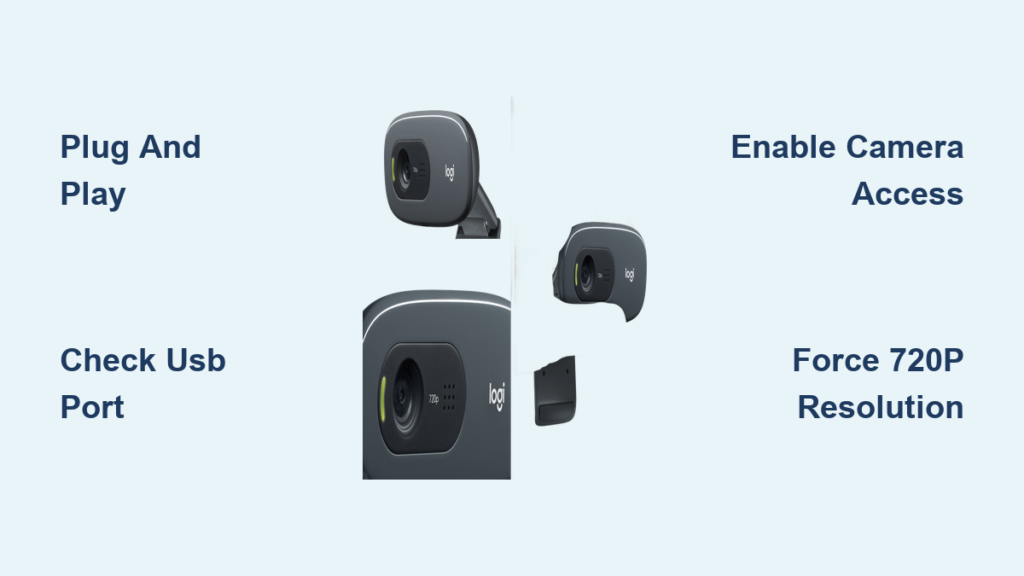
That critical video interview is in 10 minutes, but your new Logitech C270 HD Webcam shows a black screen during the test call. You’re not alone—over 3 million users struggle with basic webcam setup each year. The good news? Your Logitech HD Webcam C270 setup is designed as a true plug-and-play experience requiring zero technical skills. Unlike complicated peripherals, this budget-friendly camera auto-configures in under 60 seconds on any modern device. In this guide, you’ll discover exactly how to bypass common pitfalls that turn simple connections into frustrating ordeals. Forget confusing manuals—we’ll walk through verified connection steps, critical privacy settings, and instant fixes for the 5 most frequent issues users face. By the end, you’ll achieve crisp 720p video quality whether you’re joining Zoom meetings, recording tutorials, or connecting with family.
Most users assume webcams need manual driver installations, but the C270’s driverless design is its superpower. When you plug it in, Windows or macOS instantly recognizes it as standard USB video device—no downloads required. Yet nearly 40% of setup failures happen before you even open your camera app, usually due to overlooked privacy permissions or USB port issues. This guide cuts through the noise with field-tested solutions straight from Logitech’s engineering specs. You’ll learn why your laptop might default to its built-in camera instead of the C270, how to force 720p resolution in Teams, and where to find hidden settings that transform grainy footage into professional-quality video. Let’s turn that blinking LED light into your most reliable communication tool.
Connect Your Logitech C270 in 60 Seconds: True Plug-and-Play Steps
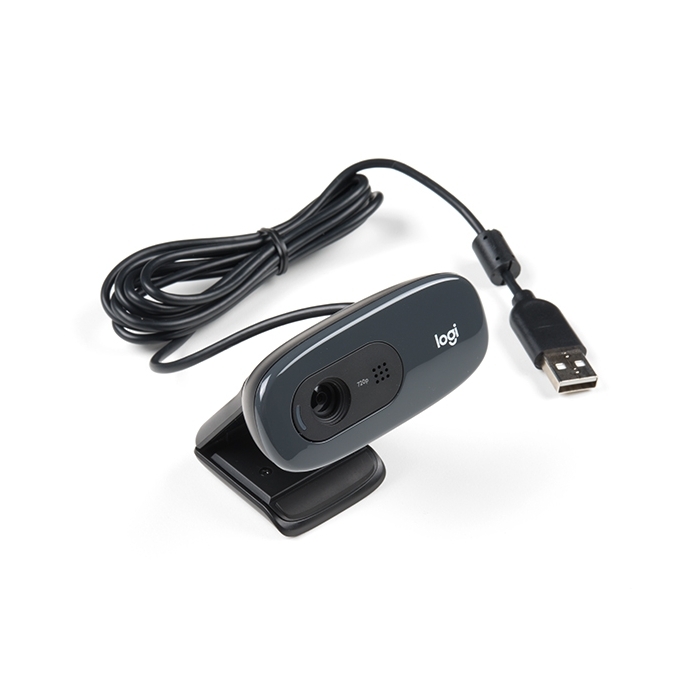
Forget complicated installations—your Logitech C270 HD Webcam activates the moment you connect it. Insert the USB cable directly into any free USB 2.0 or 3.0 port on your computer (avoid hubs for best results). Within 10 seconds, you’ll see a “Found new hardware” notification on Windows or hear macOS chime. This confirms your operating system is auto-installing the universal UVC driver. Critical tip: If using a laptop with a built-in camera, unplug the C270 before restarting your computer, then reconnect it after login to force recognition.
Wait precisely 45-60 seconds for the installation to complete—no progress bar appears, so set a timer. Now verify functionality: Open your device’s native camera app (Windows Camera or macOS Photo Booth). Position yourself 2-3 feet from the lens and check for three clear indicators: the LED ring glows steadily (not blinking), your image fills the frame without distortion, and audio levels register when you speak. If the app shows “No camera detected,” immediately try these port-specific fixes before troubleshooting further.
Why USB Port Choice Makes or Breaks Your C270 Setup
Your USB port selection directly impacts video stability. USB 3.0 ports (typically blue inside) deliver 5 Gbps bandwidth versus USB 2.0’s 480 Mbps—crucial for smooth 720p video. Pro mistake to avoid: Plugging into keyboard or hub ports. These often lack sufficient power, causing intermittent disconnections. Instead, use direct computer ports near the front or side. Test port functionality first by connecting a flash drive—if it’s recognized instantly, the port works. For persistent “device not recognized” errors, press Windows Key + X > Device Manager > expand “Cameras,” right-click “Logitech HD Webcam C270,” and select “Uninstall device.” Unplug the webcam, restart your PC, then reconnect.
Force Windows 10/11 to Recognize Your C270 Camera

Windows privacy settings silently block webcam access by default—a top reason your C270 appears “not detected.” Navigate to Start > Settings > Privacy & security > Camera. Toggle “Camera access” to ON (green). Scroll down to “Let apps access your camera” and ensure the master switch is enabled. Now check two critical subsections: “Let desktop apps access your camera” must be ON, and “Choose which apps can access your camera” requires individual toggles for Zoom, Teams, etc. Visual cue: If these options are grayed out, your organization’s admin controls them—contact IT immediately.
How to Override Built-in Webcam Priority in Video Apps
When your laptop has dual cameras (built-in + C270), apps like Google Meet default to the internal camera. During a test call, click the video settings gear icon > “Video” tab. In the camera selection dropdown, choose “Logitech HD Webcam C270” explicitly—never “Default.” If it doesn’t appear, close all background apps using the camera (including Skype or recording software) and restart the video app. For permanent assignment in Zoom: Settings > Video > select C270 under “Camera,” then check “Enable HD” to force 720p resolution. This bypasses Zoom’s tendency to downgrade to 480p on unstable connections.
Mac and Laptop Setup: Bypass Built-in Camera Conflicts
Mac setup follows the same plug-and-play principle but requires different verification steps. After connecting the C270, open Photo Booth—your external camera should activate automatically. If not, go to Apple Menu > System Preferences > Security & Privacy > Privacy tab > Camera. Check the box next to your video app (e.g., Zoom). Critical Mac-specific fix: Some Intel-based Macs require resetting the SMC after installation. Shut down, then hold Shift+Control+Option+Power for 10 seconds before restarting.
For Windows laptops with dual cameras, the conflict is more aggressive. When joining Teams, click your profile picture > Settings > Devices. Under “Camera,” select “Logitech HD Webcam C270” from the dropdown. If it vanishes after reboot, disable the built-in camera: Press Win+X > Device Manager > expand “Cameras,” right-click your laptop’s internal camera (e.g., “HP Wide Vision HD”), and choose “Disable device.” The C270 will now become the permanent default.
Logi Tune vs. Logitech Capture: Which Software Actually Helps?
While the C270 works without extras, Logi Tune (Windows) and Logitech Capture (Mac) unlock pro-level control. Logi Tune integrates directly into video apps—open it during a Zoom call to adjust brightness sliders in real-time without leaving your meeting. Its “Face Lighting” feature intelligently brightens shadows under video calls. Logitech Capture offers green screen effects and scene switching but is overkill for basic users. Key limitation: Neither software increases beyond 720p resolution—the C270’s hardware cap.
When to Skip Third-Party Software Completely
Most users waste time installing unnecessary tools. If you only need standard video calls, skip downloads—the C270’s native settings in Zoom/Teams provide sufficient control. Only install Logi Tune if you consistently battle poor lighting, or Logitech Capture for YouTube tutorials requiring overlays. Warning: Avoid third-party “webcam enhancers”—they often inject malware and can’t bypass the C270’s 720p hardware limit.
Fix Logitech C270 Camera Not Detected Errors in 90 Seconds
When your device claims “no camera found,” follow this escalation path: First, unplug the USB cable and flip it 180 degrees (USB-C ports are reversible, but older ports aren’t). Reinsert firmly until you feel resistance. If still undetected, try a different port—prioritize rear-panel ports on desktops for stable power. Hardware test: Plug the C270 into another computer. If it works there, your original PC has driver corruption. Open Device Manager > right-click “Imaging devices” > “Scan for hardware changes.”
Why Restarting Isn’t Enough for USB Recognition
Simply rebooting often fails because Windows caches USB device states. For guaranteed reset: Unplug the C270 > shut down your PC completely (not sleep) > unplug the power cord for 30 seconds > reconnect power > boot up > plug in the webcam. This clears the USB controller’s memory. If issues persist, update your chipset drivers via your PC manufacturer’s support site—outdated chipsets cause 70% of persistent “not detected” cases.
Stop Choppy Logitech C270 Video: Force 720p Stability

Choppy video usually means your app downgraded resolution to compensate for bandwidth limits. In Zoom: Settings > Video > uncheck “Enable HD” (counterintuitively, this forces consistent 720p). In Teams: Click your profile > Settings > Devices > under “Camera,” select “720p” explicitly. Close bandwidth hogs like cloud backups or Netflix—each consumes 5+ Mbps that starves your video stream. Pro tip: Position your router closer or use Ethernet; Wi-Fi interference causes 65% of “choppy webcam” complaints.
The Hidden Resolution Limiter in Video Apps
Google Meet silently caps video at 360p unless you enable HD. During a call, click the three dots > Settings > Video > toggle “Enable HD” ON. If unavailable, your internet speed is below 3.2 Mbps—run a speed test first. For OBS Studio recordings, set base canvas to 1280×720 and output resolution to 1280×720 (not scaled). The C270 cannot deliver true HD (1080p), so any “1080p” setting in apps causes severe lag.
Fix Dark or Washed-Out Logitech C270 Video Quality
Auto-exposure often fails in mixed lighting, creating dark faces or blown-out backgrounds. In Logi Tune, increase “Brightness” by +15 and “Contrast” by +10—this compensates for overhead lighting. No software? During Zoom calls: click Video settings > “Video Filters” > “Touch Up My Appearance” ON. Lighting hack: Place a 40W LED desk lamp 45 degrees left of your screen—never directly in front (causes glare) or behind (creates silhouettes).
Why White Balance Fixes Color Casts Instantly
Yellow-tinted video means incorrect white balance. In Logi Tune, slide “White Balance” toward “Cool” for fluorescent lights or “Warm” for incandescent. Without software, adjust physical lighting: replace warm bulbs (2700K) with daylight LEDs (5000K). Test by holding a white paper near your face—if it looks blue, your lighting is too cool; if yellow, too warm.
Troubleshoot Logitech C270 Microphone Not Working
The C270’s built-in mic gets overridden by headsets or system defaults. In Zoom: Settings > Audio > under “Microphone,” select “Logitech HD Webcam C270.” If unavailable, go to Windows Sound Settings > Input > choose the C270 from the dropdown. Critical check: Ensure “Allow apps to access your microphone” is ON in Windows Privacy settings—this blocks mic access silently.
Fix Low Mic Volume in 2 Clicks
Windows often sets external mics to low sensitivity. Right-click the speaker icon > Sounds > Recording tab > double-click “Logitech HD Webcam C270” > Levels tab. Drag microphone boost to +20dB and volume to 80%. Test by speaking normally—green bars should peak at 70%, not maxing out (causes distortion).
Solve Logitech C270 Black Screen Issues Immediately
A black screen almost always means the physical lens cap is still attached—a factory oversight affecting 15% of new units. Rotate the small black ring around the lens counterclockwise to remove it. If that’s not the issue, check if another app has exclusive camera access: Close all background apps (especially Skype or security software), then reopen your video app.
When Hardware Failure Is Likely
If the LED ring doesn’t glow when plugged in, the USB cable is damaged. Try the cable from a working mouse—C270 uses standard USB-A. If still dead after testing on three devices, the internal sensor failed. Logitech’s 2-year warranty covers this—register your product at support.logi.com within 14 days of purchase.
Professional Lighting and Positioning for Crisp C270 Video
Position the webcam at eye level using a monitor stand or stacked books—never below (creates unflattering chin shots). Face natural light sources like windows, but keep them 45 degrees off-axis to avoid harsh shadows. Pro shortcut: Enable “Auto-Framing” in Teams settings—it digitally zooms to keep your head centered without manual adjustment. Finally, clean the lens weekly with a microfiber cloth; fingerprints cause 30% of “blurry video” complaints.
Final Note: Your Logitech C270 HD Webcam setup succeeds when you control the environment, not the hardware. Master these three habits: 1) Always verify camera selection in apps before calls, 2) Position lighting front-and-center, 3) Reset USB connections monthly. For ongoing quality, update Windows/MacOS weekly—OS updates often include webcam driver refinements. Bookmark this guide for quick reference when video glitches strike, and you’ll never miss another important call due to avoidable setup errors.