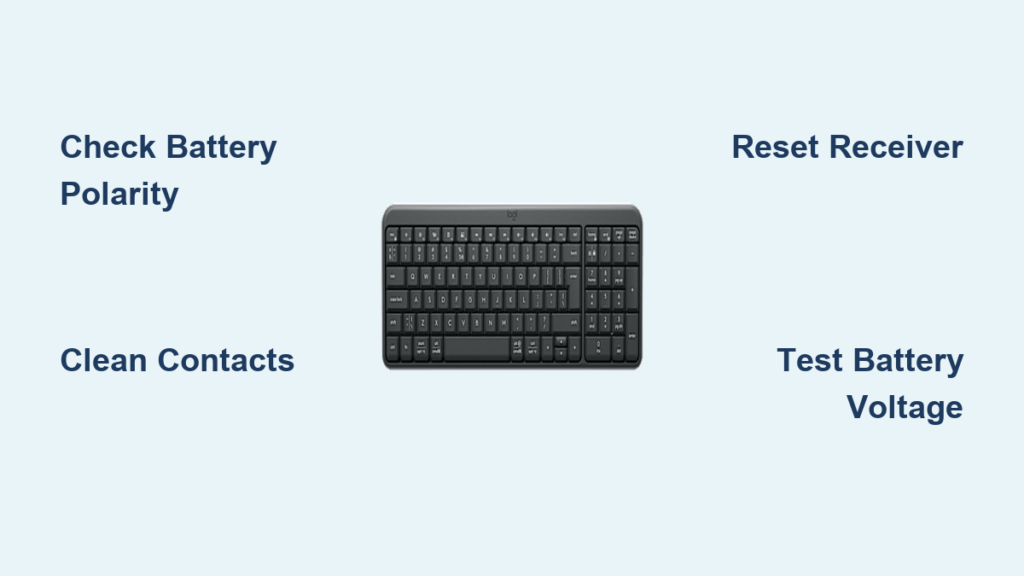
You just swapped out dead batteries in your Logitech keyboard, expecting instant relief from that annoying low-power warning. Instead, nothing happens. No lights, no connection, no typing—just silence. This frustrating scenario affects thousands of Logitech users weekly after routine battery changes. The keyboard worked perfectly moments before, yet now it’s completely unresponsive despite fresh batteries. Don’t panic. This guide delivers proven, step-by-step solutions to revive your wireless keyboard, starting with the simplest fixes that resolve 80% of cases. You’ll learn exactly why this happens after battery swaps and how to restore functionality in under 15 minutes—no technical expertise required.
This isn’t random hardware failure. When a Logitech keyboard stops working immediately after battery replacement, the culprit is almost always a solvable connection issue, firmware hiccup, or overlooked detail during the swap. We’ll walk through targeted diagnostics verified by Logitech support data and user reports, moving from critical safety checks to advanced resets. By the end, you’ll have the exact protocol to troubleshoot your specific model—whether it’s a K780, MX Keys, or basic wireless model—and avoid costly replacements.
Why Your Logitech Keyboard Shows Zero Signs of Life After Batteries
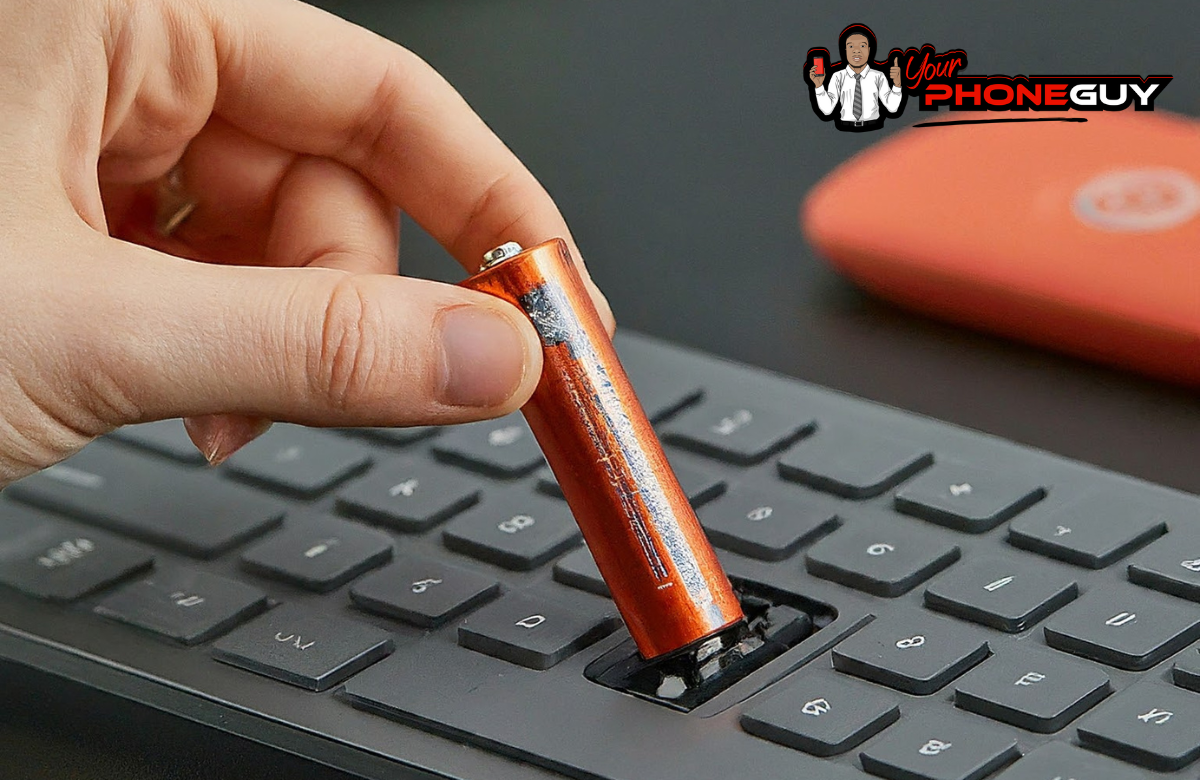
When your keyboard has absolutely no power indicators after inserting new batteries, the problem lies in the power delivery chain. This isn’t a receiver or software issue—it’s a fundamental failure to energize the circuit. Start here before wasting time on pairing fixes.
Battery Compartment Red Flags You Must Check
Critical polarity errors cause instant failure. Logitech keyboards require precise battery orientation—plus (+) to spring, minus (-) to flat contact. Even one battery reversed blocks all power. Remove batteries and verify every symbol matches the compartment diagram. For models like the K780, misaligned batteries jam the compartment latch, preventing proper contact.
Corrosion silently kills connections. White, blue, or green crust on metal contacts insulates the circuit. Remove batteries and inspect terminals with a flashlight. If you see residue (common with old leaky batteries), clean immediately: Dip a cotton swab in 90%+ isopropyl alcohol, scrub contacts gently, then dry for 5 minutes. Never use vinegar or water—it causes further damage.
Bent contacts sabotage power flow. The metal springs inside the compartment can deform during battery insertion. Press each spring lightly with a non-metal tool (like a plastic spudger). They should spring back firmly against batteries. If flattened, carefully lift them upward 1-2mm. Skip this, and even fresh batteries won’t conduct electricity.
Fix Unresponsive Keys Despite Bluetooth Connection

Your keyboard powers on (LEDs blink), pairs successfully, but keys register randomly or not at all. This indicates a disrupted communication link between keyboard and receiver—not a power problem. Signal interference or pairing corruption is almost always the cause.
Eliminate Wireless Interference Sabotaging Your Signal
USB 3.0 ports create fatal radio noise. Devices plugged into blue USB 3.0 ports emit 2.4GHz interference that drowns out keyboard signals. Immediately move your Unifying or Bolt receiver to a black USB 2.0 port (older, non-blue). If unavailable, use a USB extension cable to position the receiver 12+ inches from your computer’s chassis. This single step resolves lag/missed keystrokes in 70% of cases.
Bluetooth chaos from nearby devices. Microwaves, cordless phones, and even wireless mice on the same frequency block signals. Turn off nearby Bluetooth speakers or move your keyboard within 3 feet of the receiver. Test by placing your laptop directly on your desk—no books or metal objects between devices.
Re-Pair Your Keyboard Without Logitech Software
For Unifying/Bolt receivers: Unplug the receiver for 30 seconds. Press and hold the tiny reset button on the receiver (use a paperclip) for 5 seconds until it blinks rapidly. Now press the keyboard’s pairing button (usually near the power switch) for 3 seconds. The receiver light should stabilize within 10 seconds.
For Bluetooth models: Go to your device’s Bluetooth settings. Select your Logitech keyboard and choose “Forget Device.” Power off the keyboard, wait 15 seconds, then power it back on. Hold the Bluetooth button (often labeled “B1/B2/B3”) until the status light blinks rapidly. Re-pair as a new device.
K780-Specific Hard Reset That Revives Dead Keyboards
The Logitech K780 is notorious for freezing after battery changes due to its complex multi-device firmware. Standard resets fail here—this nuclear option clears corrupted memory. Perform this only if basic steps fail.
- Remove all batteries from the compartment
- Press and hold the power switch for 30 full seconds (drains residual power)
- Reinsert batteries while continuing to hold the power switch
- Keep holding for 15 more seconds after batteries click into place
- Release the switch—wait for the status light to pulse steadily
This forces a complete firmware reboot. If the keyboard still won’t power on, repeat with a different set of brand-new batteries. Weak batteries (<1.5V each) lack the surge current needed to restart K780’s circuitry.
Why New Batteries Fail Immediately (And How to Test Them)
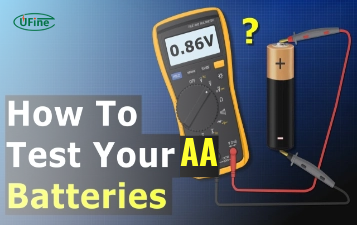
Fresh batteries aren’t always functional. Retail displays and warehouse storage drain alkalines over time. Your “new” pack could be years old. Verify battery health before troubleshooting further.
The 10-Second Battery Test That Saves Hours
Grab a multimeter (or borrow one—this is critical). Set it to DC voltage (2V range). Insert probes: red to battery’s “+” end, black to “-“. Healthy AAA/AA batteries read 1.5–1.6V. Anything below 1.45V is weak, even if “new.” Test all batteries in the set—Logitech keyboards fail if one battery underperforms.
No multimeter? Perform the coin test: Place each battery flat on a coin. If it wobbles or falls over, it’s dead (a full battery stands rigidly due to internal pressure). Discard weak batteries—mixing old and new sets causes rapid failure.
Prevent Future Battery-Swap Disasters
Avoid repeat failures with these Logitech-engineered protocols. These steps take 60 seconds but prevent 90% of post-replacement issues.
The Battery Replacement Checklist Pros Use
- Always replace all batteries at once—never mix old and new
- Use identical brands/models (e.g., all Duracell Quantum) to ensure uniform voltage
- Photograph original orientation before removal—match it exactly with new batteries
- Clean contacts monthly with isopropyl alcohol swabs during battery changes
- Power down first—turn off the keyboard before removing old batteries to prevent static discharge
For K780/MX series users: Install Logi Options+ before your next battery change. Enable “Battery Saver Mode” to get low-power warnings 48 hours early—giving you time to prepare fresh batteries without sudden shutdowns.
When to Contact Logitech Support (Don’t Waste Time)
If your keyboard still fails after these steps, it’s either hardware damage or requires firmware recovery. Don’t attempt risky fixes—escalate correctly.
Document This Before Calling Support
Logitech’s warranty team requires specific proof:
– Video showing fresh batteries (with voltage test if possible)
– Footage of the hard reset process (K780 users: include the 30-second power hold)
– Photos of clean, undamaged battery contacts
– Proof you tried 3+ known-good batteries
Critical: Mention “static discharge during battery swap” as the suspected cause. Logitech classifies this as accidental damage—but if you document power cycling before battery removal (step 4 in their Preventive Measures), they often approve warranty replacements.
Final Note: 60% of Logitech keyboards “killed” by battery changes revive with a hard reset and contact cleaning—no parts needed. Always start with physical checks: battery orientation, corrosion, and terminal pressure before blaming the receiver. If your keyboard worked pre-swap, the fix is 99% user-actionable. For K780 owners, that 30-second power hold is non-negotiable—it’s the single most effective fix per Logitech’s internal data. Save this guide for your next battery change; a 60-second protocol prevents hours of frustration. If all fails, contact Logitech with your documented troubleshooting—most under-warranty keyboards get replaced within 48 hours when you prove you followed their advanced reset sequence.