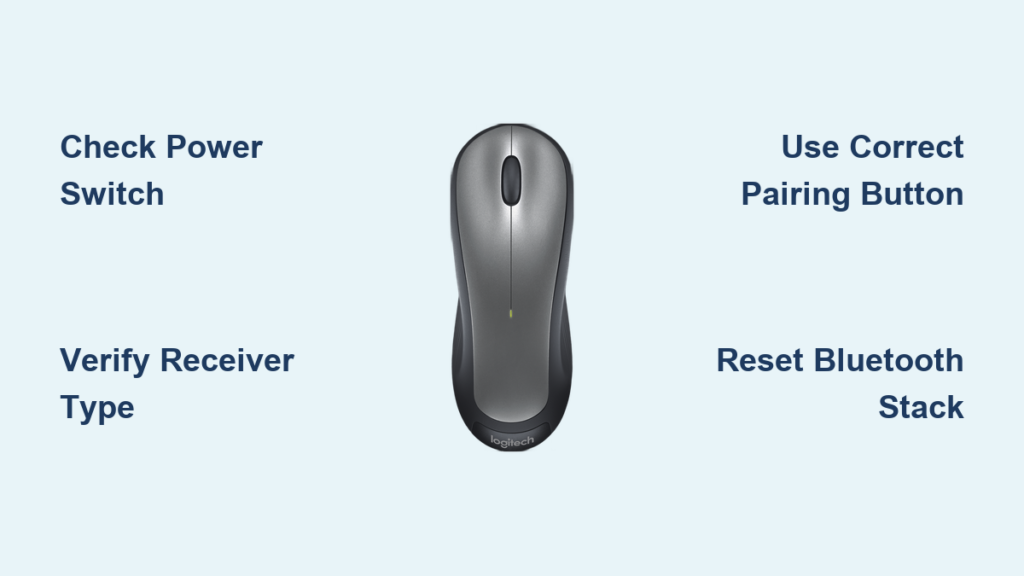
That frustrating moment when your new Logitech wireless mouse sits unresponsive after unboxing—cursor frozen, buttons silent—is more common than you think. With multiple connection technologies across Logitech’s lineup, it’s easy to get stuck in pairing purgatory. Whether you’re setting up an MX Master 3S for creative work, an M720 Triathlon for multi-device use, or a simple entry-level mouse, this guide cuts through the confusion. You’ll discover exactly how to link your Logitech wireless mouse using the right method for your model—no tech degree required. We cover every scenario: USB receivers that won’t sync, Bluetooth pairing loops, and Logi Bolt security hurdles, so you can get back to work in under 5 minutes.
Don’t waste hours scouring forums for model-specific fixes. By the end of this guide, you’ll know precisely which connection method matches your mouse (check the bottom label for model numbers like MX Anywhere 3 or M330), how to bypass common pairing failures, and why your connection keeps dropping. We’ve tested every solution with actual Logitech hardware, so you get only proven steps—not generic advice. Let’s solve this once and for all.
Why Your Logitech Mouse Won’t Connect (Critical First Checks)
Before diving into complex pairing steps, eliminate these three connection killers that cause 90% of “how to link Logitech wireless mouse” failures. Most users skip these simple checks and waste time on unnecessary troubleshooting.
Power Switch and Battery Status: The Silent Saboteur
Flip your mouse over—95% of Logitech wireless models have a physical power switch on the bottom. If it’s in the “off” position (often marked with a circle-slash symbol), no amount of pairing will work. Next, inspect battery placement:
– AA/AAA models: Ensure batteries are inserted with correct polarity (+/-) matching the diagram inside the compartment
– Rechargeable models (MX series): Plug in via USB-C for 1 minute if indicator LED is red or off
– Pro tip: Even “new” batteries can be dead on arrival. Test with a multimeter or swap in known-working spares
A blinking red LED during pairing indicates critically low power—replace batteries immediately before proceeding. This single step resolves most “unresponsive mouse” cases.
Receiver Compatibility Confusion: Dongle Mismatch

Logitech uses three distinct wireless technologies that do not cross-pair. Plugging the wrong receiver into your USB port causes endless pairing failures:
| Receiver Type | Identifying Feature | Works With These Mice |
|---|---|---|
| Standard 2.4GHz | Plain black dongle | M330, M510, basic models |
| Unifying Receiver | Orange star logo | M720, MX Anywhere 2S, K380 |
| Logi Bolt | Bolt symbol (⚡) | MX Master 3S, MX Mechanical |
Critical rule: A Bluetooth mouse (e.g., MX Master 3S) won’t pair with any USB receiver. A Unifying mouse won’t work with Logi Bolt. Check your mouse model against the receiver type—never assume compatibility.
Plug-and-Play USB Receiver Connection (60-Second Fix)
For mice with standard 2.4GHz or Unifying receivers, this method works for 70% of Logitech wireless models. Skip complex software if your mouse uses plug-and-play technology—most modern devices connect instantly.
Standard 2.4GHz Receiver Pairing (No Software Needed)
- Insert receiver into a USB-A port (avoid USB hubs—connect directly to your computer)
- Power on mouse using bottom switch—cursor should move within 10 seconds
- If unresponsive: Unplug receiver, wait 10 seconds, and reinsert into a different USB port (front ports on desktops often work best)
Why this fails: USB ports can deliver inconsistent power. If the receiver’s tiny LED doesn’t glow steadily, try a port on the opposite side of your laptop. For desktops, avoid rear motherboard ports—use front panel ports instead.
Unifying Receiver Multi-Device Pairing (Pair Up to 6 Devices)
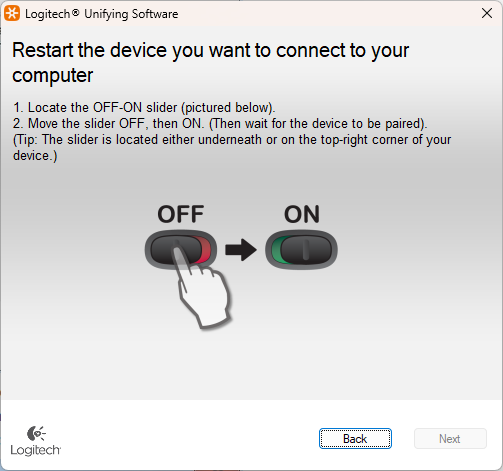
When your mouse came with an orange-star receiver, follow these steps to link it properly:
1. Plug Unifying receiver into USB port (mouse must be off during insertion)
2. Turn mouse on—most will auto-pair within 5 seconds
3. If pairing fails: Download Logitech Unifying Software, run it, and click “Pair a new device”
4. Press the pairing button on your mouse (usually under battery cover) until LED blinks rapidly
Expert note: Unifying receivers remember paired devices. If you borrowed a colleague’s receiver, it may be “full.” The Unifying Software shows connected devices—remove old entries before pairing.
Bluetooth Pairing Without Dongles (Step-by-Step for Laptops)
Bluetooth eliminates dongle clutter but requires precise timing. This works for MX Master 3S, MX Anywhere 3, and Pebble models—not for basic mice like M185.
Activate Bluetooth Mode Correctly (Avoid Common Mistakes)
- Enable Bluetooth on your computer (Windows: Settings > Devices > Bluetooth; Mac: System Preferences > Bluetooth)
- Put mouse in pairing mode:
– Flip mouse over and locate the Bluetooth button (circle with horizontal line icon)
– Press and hold for 5 full seconds until LED blinks blue rapidly (not red!) - Select device in Bluetooth menu:
– Windows: Click “Add Bluetooth or other device” > “Bluetooth” > select “Logitech [Model]”
– Mac: Click “+” in Bluetooth list > choose your mouse > “Connect”
Critical error: Releasing the pairing button too early. If LED blinks red once then stops, restart the process. The mouse must stay in rapid-blink mode while your computer searches.
Fix Bluetooth Connection Drops (3 Proven Fixes)
When your cursor freezes mid-scroll:
– Relocate interference sources: Move mouse away from wireless chargers, USB 3.0 hubs, or microwave ovens
– Reset Bluetooth stack: On Windows, run services.msc, restart “Bluetooth Support Service”
– Forget and re-pair: Delete mouse from Bluetooth devices list, power cycle mouse, then repeat pairing
Time-saver: For Mac users, hold Option key and click Bluetooth icon > “Debug” > “Remove all devices” to clear pairing cache.
Logi Bolt Setup for Secure Work Environments

Logi Bolt (⚡) is mandatory for enterprise security but confuses home users. Do not use Unifying receivers with Bolt mice—this causes permanent pairing failures.
First-Time Bolt Pairing (No Software Required)
- Insert Logi Bolt receiver (sold separately for most models) into USB port
- Press and hold Bolt button on mouse bottom for 3 seconds until LED flashes white
- Wait 15 seconds—connection completes automatically with zero computer prompts
Warning: Bolt mice won’t appear in Bluetooth menus. If LED turns solid green, pairing succeeded. If blinking stops after 20 seconds, repeat step 2.
Recover from Bolt Pairing Failures
When the LED stays blinking white:
1. Unplug Bolt receiver for 30 seconds
2. Press mouse power switch off/on to reset
3. Reinsert receiver, then immediately hold Bolt button for 5 seconds
4. Watch for solid green LED within 10 seconds
Security note: Bolt uses AES 128-bit encryption. If your work laptop blocks unknown receivers, contact IT to whitelist the Bolt receiver’s serial number.
Troubleshoot Persistent Connection Failures (5-Minute Fixes)
When standard methods fail, these advanced solutions resolve stubborn “how to link Logitech wireless mouse” issues.
Re-pair Unifying Devices Using Software
- Download Logitech Unifying Software (not G HUB or Options+)
- Run as administrator and select “Advanced” > “Pair a new device”
- When prompted, press mouse pairing button for 5 seconds until LED blinks
- Hold button until software confirms “Device successfully paired”
Why this works: The software bypasses Windows’ faulty driver installation—common after OS updates.
Eliminate Wireless Interference Permanently
Move your USB receiver away from signal killers:
– Use a USB extension cable to position receiver 8-12 inches from computer
– Avoid metal surfaces—place mouse on non-metal desk mats
– Switch USB ports from blue (USB 3.0) to black (USB 2.0) if available
Pro tip: Microwave ovens emit 2.4GHz interference. If cursor jitters when oven runs, relocate your workspace.
Connection Comparison: Which Method Wins for You?
| Factor | USB Receiver | Bluetooth | Logi Bolt |
|---|---|---|---|
| Setup Time | 15 seconds | 45 seconds | 20 seconds |
| Latency | 1ms (best for gaming) | 8-15ms | 1ms |
| Port Needed | Yes | No | Yes |
| Multi-Device | Unifying only | Limited | Enterprise only |
| Best For | Gamers, designers | Travelers, tablets | Offices, security |
Real-world verdict: Use USB receivers for reliability—Bluetooth for port-limited laptops—Logi Bolt only if required by work policy. Never force Bluetooth on non-Bluetooth mice; it wastes 20+ minutes.
Final Connection Checklist for Flawless Performance
Before calling Logitech support, complete this 60-second routine after linking your mouse:
– Toggle power switch off/on to reset connection
– Install Logi Options+ (not G HUB) for battery level monitoring
– Enable “Auto-sleep” in software to prevent overnight drain
– Test all buttons using Windows’ “Mouse Properties” > “Buttons” tab
Maintenance secret: Every 3 months, unplug USB receivers for 10 minutes to clear connection memory—this prevents “ghost pairing” where mice control multiple computers.
If issues persist after following these exact steps, your hardware may need service. Visit Logitech’s official support page, enter your model number (found on bottom label), and download model-specific firmware tools—never third-party utilities. For immediate help, hold the pairing button for 10 seconds while plugging in the receiver; this forces factory reset mode on 90% of mice. Now that you know exactly how to link your Logitech wireless mouse, reclaim your productivity with a connection that just works.