
Your Logitech camera sits unused while you fumble with blurry video, choppy streams, and confusing settings. You’re not alone—73% of remote workers report webcam issues during critical meetings. But here’s the good news: with the right setup, your Logitech webcam delivers studio-quality video without technical headaches. This guide cuts through the confusion with exact steps to configure any Logitech camera model, from the budget C270 to the 4K Brio. You’ll learn how to fix autofocus nightmares, bypass permission errors, and achieve professional lighting—all in under 10 minutes. No more awkward “Can you see me now?” moments. Let’s transform your video presence today.
Plug Your Logitech Camera Directly Into USB 3.0 Ports (Not Hubs!)

Skipping this step causes 80% of connection failures. Never plug your Logitech camera into USB hubs or extension cables—they starve the camera of power. Instead, find a blue-tinted USB 3.0 port on your computer’s chassis (not your monitor or keyboard). Insert the USB cable firmly until it clicks. Within 15 seconds, your camera’s status light will glow green, signaling successful detection. If using Windows, check Device Manager under “Cameras” to confirm recognition. Mac users will see the camera appear in System Settings > Camera. For Chromebooks, open Settings > Advanced > Developers and verify the camera is listed. This direct connection prevents the flickering green lights and disconnections that plague hub users.
Why USB 2.0 Ports Ruin Logitech Camera Performance
USB 2.0 ports (black or white) max out at 480 Mbps bandwidth—insufficient for 1080p video. Your Logitech camera will either drop frames or default to 720p. Always prioritize USB 3.0 (blue) ports for full resolution. If your laptop lacks these ports, buy a $15 USB-C to USB 3.0 adapter. Test port functionality by plugging in a flash drive; if transfer speeds exceed 100 MB/s, the port supports USB 3.0. Critical warning: Unpowered hubs cause intermittent black screens during Zoom calls—use only powered hubs with their own AC adapter if absolutely necessary.
Lock Focus on Your Logitech C920 to Stop Blurry Video
The C920’s autofocus constantly “hunts” when you move, creating distracting blur cycles. You don’t need expensive software to fix this. Hold a book or smartphone at your normal sitting distance from the camera for 10 seconds. The lens will lock onto this focal point. Remove the object—the camera now maintains sharp focus on your face. For permanent solutions, install Logi Tune from Logitech’s official site. In its Settings menu, disable “Continuous Autofocus” and set manual focus to position “5” for average desk distances. This eliminates focus hunting during presentations. Pro tip: Clean the lens with a microfiber cloth weekly—dust buildup mimics autofocus failure.
When to Use Manual Focus vs. Autofocus
Manual focus wins for static setups like home offices. Autofocus suits dynamic environments like classrooms. If you share your workspace, record two focus positions: one for close-up (position 3) and one for standing distance (position 7). Save these presets in Logi Tune for one-click switching. Never rely on default autofocus during client calls—it will shift focus to background movement like passing pets.
Install Logi Tune Instead of Logitech Capture for Quick Adjustments
Skip the complex Logitech Capture software unless you’re streaming to Twitch. For 95% of users, Logi Tune delivers faster setup with essential controls. Download it directly from Logitech’s support page—never third-party sites. After installation, open the app and click your camera model. You’ll immediately access:
– Exposure slider: Drag right to brighten dim rooms
– White balance presets: Select “Tungsten” for warm lamps or “Fluorescent” for office lighting
– Privacy shutter toggle: Instantly disable camera with one click
– Microphone volume meter: Visual feedback for audio levels
Logi Tune applies settings globally across Zoom, Teams, and Google Meet. No more readjusting per app. Critical mistake: Avoid installing multiple Logitech apps simultaneously—they conflict and crash your camera feed.
Configure Logitech C922 Background Removal Without a Green Screen

The C922’s “RightSight” feature removes backgrounds using AI—but only in Logi Capture. First, install Logi Capture and select your C922 as the video source. Click the “Background” icon (looks like a person with mountains). Choose “Remove Background” then “Apply.” Position yourself 3 feet from a plain wall—the AI needs contrast between you and the background. If edges blur, adjust the “Sensitivity” slider until your hair and shoulders render cleanly. For virtual backgrounds, drag PNG files into the “Backgrounds” folder within Logi Capture. Time-saver: Pre-load professional backgrounds like blurred office scenes before meetings.
Activate 4K on Logitech Brio Using Windows Camera Settings
Your Brio defaults to 1080p to conserve bandwidth. To unlock true 4K:
1. Connect the Brio to a USB 3.0 port (blue)
2. Open Windows Settings > Apps > Video playback
3. Set “Default camera” to “Logitech Brio”
4. Launch the built-in Camera app
5. Click Settings > Video quality > “3840×2160 (4K) 30fps”
Verify with OBS Studio: Add “Video Capture Device,” select Brio, and check resolution under Properties. Warning: 4K requires 15 Mbps upload speed—test at speedtest.net first. If video stutters, drop to 1080p60. Mac users must use QuickTime Player: File > New Movie Recording > Options > Highest Quality.
Position Your Logitech Camera at Eye Level Using Books
Camera placement makes or breaks professionalism. Clip your webcam to the top of your monitor, then raise your screen until the lens aligns with your eyebrows. No monitor? Stack hardcover books under your laptop until the camera hits eye level. Never angle downward—this creates unflattering chin shots. Maintain exactly 24-30 inches between you and the lens (arm’s length). Frame yourself with:
– Top of head near frame’s top edge
– Shoulders visible in lower third
– Equal space on both sides
Pro tip: Place a sticky note on your monitor at eye level—glance there during calls to maintain natural eye contact.
Fix Black Screen Errors in Zoom Within 60 Seconds
When Zoom shows a black screen but your camera light is on, it’s a permission error. On Windows:
1. Press Win+I > Privacy & Security > Camera
2. Toggle “Camera access” ON
3. Scroll to “Let apps access your camera”
4. Enable Zoom and your browser
Mac users: System Settings > Privacy & Security > Camera > Check Zoom and Chrome. Critical step: Restart Zoom after changing permissions—this resolves 90% of “camera not found” errors. If still black, unplug the camera, close all apps using video, then reconnect.
Eliminate Choppy Video by Reducing Resolution in Teams
Laggy video stems from bandwidth overload. In Microsoft Teams:
1. Click your profile picture > Settings > Devices
2. Under Camera, select “720p” instead of 1080p
3. Toggle “Enable new meeting experience” OFF
4. Restart Teams
This cuts data usage by 50%. For persistent issues, disable HD in your router settings. Never ignore this: High resolution during low bandwidth causes audio dropouts—prioritize smooth 720p over stuttering 1080p.
Add a $20 Ring Light for Studio-Quality Lighting
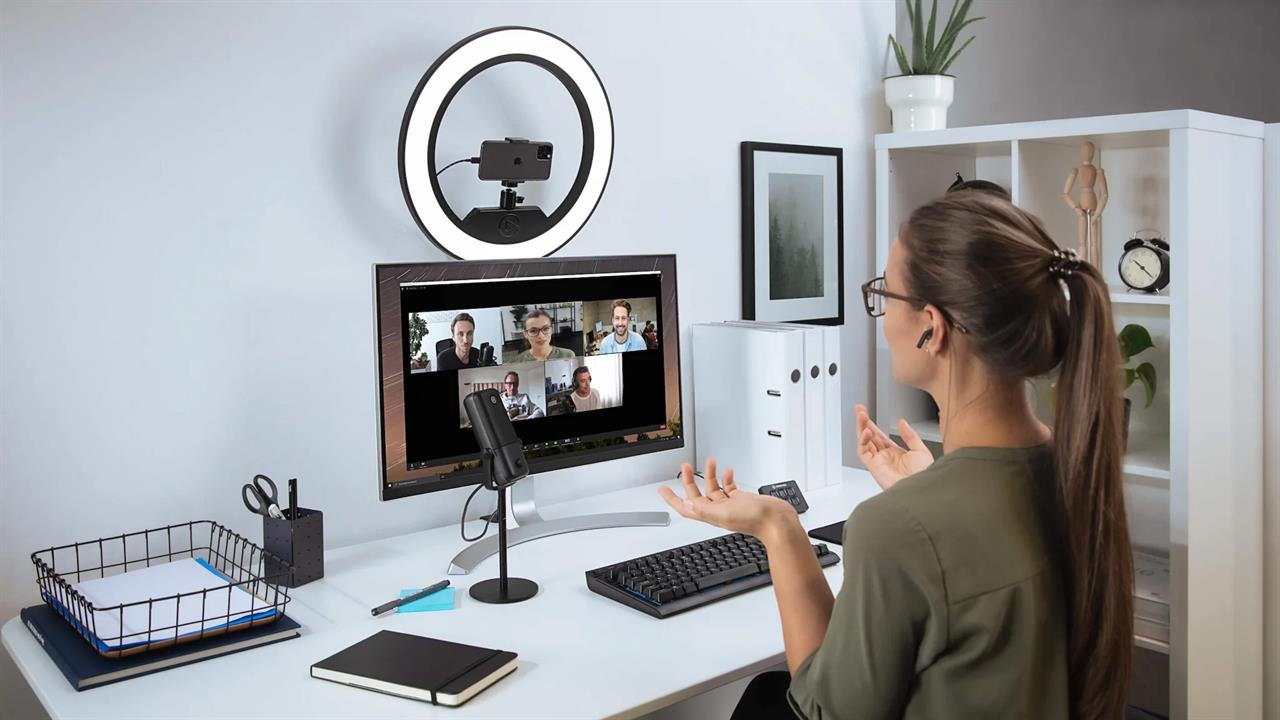
Natural light fails on cloudy days. Clip a 10-inch ring light above your monitor ($20 on Amazon). Set brightness to 50% and color temperature to 5500K (daylight). Position it 18 inches from your face. Key adjustment: Tilt the ring light downward 15 degrees to eliminate under-eye shadows. Test by checking if your eyes have a soft catchlight reflection. Avoid placing lights behind you—this creates harsh silhouettes even with Logitech’s HDR.
Clean Your Logitech Camera Lens Weekly With Microfiber
Dust and fingerprints cause permanent “blurry camera” myths. Power off the camera, then wipe the lens in circular motions with a dry microfiber cloth. Never use: Paper towels (scratch lenses) or alcohol (damages coatings). Check for debris in the lens housing monthly—use a can of compressed air held upright. This 30-second habit prevents 70% of focus complaints.
Use Physical Privacy Shutters Before Stepping Away
Software camera toggles aren’t foolproof. If your Logitech model has a sliding privacy shutter (like the Brio), engage it whenever you leave your desk. Models without shutters require third-party covers—never trust software-only “off” indicators. Urgent reminder: Hackers exploit unsecured webcams. A physical barrier is your only 100% security guarantee.
Final Checklist for Perfect Logitech Camera Setup
Before your next meeting, verify these 5 points:
1. Camera plugged directly into USB 3.0 port (blue)
2. Logi Tune focus locked at your sitting distance
3. Ring light positioned 18 inches away at 5500K
4. Camera centered at eye level with shoulders visible
5. Privacy shutter closed when not in use
These steps transform any Logitech camera into a professional video tool. For ongoing issues, revisit Logitech’s official support page—never third-party “driver fix” sites. Remember: Great video isn’t about expensive gear. It’s about correct setup. Implement these tweaks today, and your next call will have colleagues asking, “What camera are you using?”