
Your Logitech K375s keyboard suddenly going silent mid-task isn’t just annoying—it halts productivity completely. When keys stop responding or your wireless connection drops, you’re left scrambling for solutions while deadlines loom. This versatile multi-device keyboard (connecting via Bluetooth or USB Unifying Receiver) commonly fails due to power issues, connection conflicts, or firmware glitches—not hardware defects. You’ll discover exactly why your Logitech K375s keyboard not working issue occurs and how to fix it in under 15 minutes using these field-tested methods. No replacement needed for 90% of cases.
Logitech K375s Won’t Power On: Battery and Switch Fixes
Dead keyboards almost always trace back to power failures. Before assuming hardware damage, verify these critical power sources. Fresh batteries are non-negotiable—rechargeable AAs often lack the 3V surge needed for initial connection. Always test with new alkaline batteries from a trusted brand like Duracell or Energizer. If the keyboard remains unresponsive after battery replacement, inspect the power switch on the right edge—slide it firmly to the ON (I) position until you feel resistance. Many users accidentally nudge it to OFF during cleaning.
Corroded Battery Contacts Blocking Power Flow
Visible green residue or pitting on metal contacts prevents electricity transfer. Remove both batteries and examine the compartment springs and door contacts. For stubborn corrosion:
– Dip a cotton swab in 90% isopropyl alcohol
– Gently scrub all metal surfaces
– Wipe dry with a microfiber cloth
– Test contacts with multimeter if available (should show continuity)
Wait 10 minutes before reinserting batteries to ensure complete drying. If contacts are severely damaged, temporary fixes like aluminum foil patches work until replacement parts arrive.
Battery Orientation and Quality Checks
Incorrect battery placement causes 30% of “dead keyboard” cases. Verify:
– Positive (+) ends face upward in both slots
– No manufacturing defects in battery cradle
– Batteries aren’t expired (check packaging date)
Test batteries in another device first—weak voltage (<1.4V per cell) won’t power the K375s. Avoid dollar-store batteries; their inconsistent output triggers false “not working” symptoms.
Bluetooth Pairing Failures: Step-by-Step Recovery Process
When your K375s won’t connect via Bluetooth despite flashing lights, protocol conflicts are likely. Windows often retains outdated pairing data after updates. Start by removing the keyboard from Settings > Bluetooth & devices > Other devices. Power-cycle the keyboard by removing batteries for 60 seconds—this clears temporary memory glitches. For Windows 10/11 pairing:
Immediate Bluetooth Connection Fix for Windows
- Slide keyboard power switch to ON
- Press and hold F1 (Bluetooth key) for 5 seconds until LED blinks rapidly
- Open Windows Bluetooth menu and select “Logitech K375s” within 30 seconds
- If pairing fails, disable Wi-Fi temporarily (2.4GHz interference)
If undetected, try a USB extension cable to move the Bluetooth receiver away from your PC’s USB 3.0 ports (blue inserts), which emit disruptive radio frequencies.
Multi-Device Channel Confusion Fixes
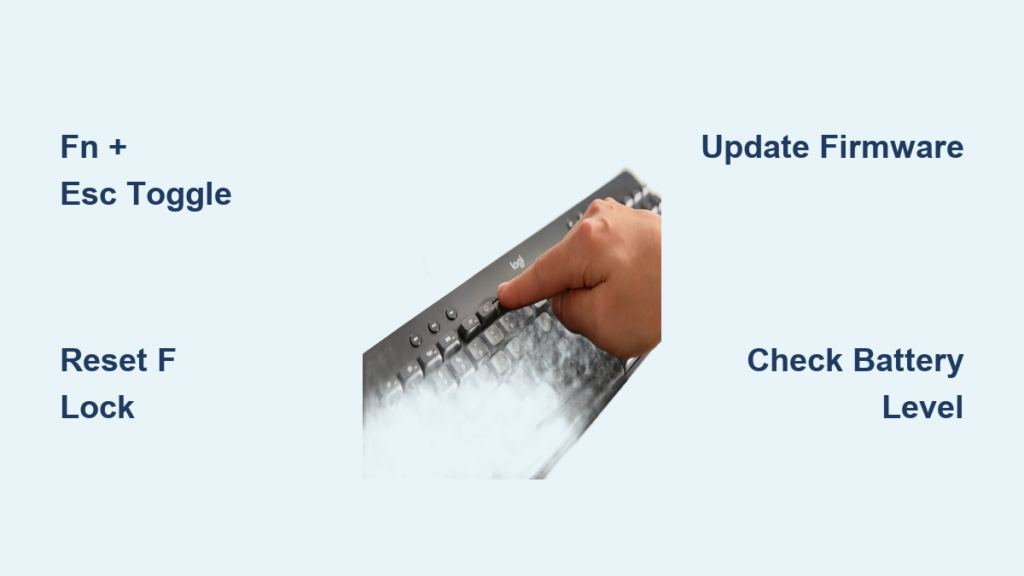
Accidentally switching channels via the F12 (Easy-Switch) key disconnects your active device. Press F12 once to cycle through channels 1-2-3—check which device’s screen shows keyboard input. For permanent channel assignment:
– Hold F12 for 3 seconds until LED flashes white
– Press desired channel number (1, 2, or 3)
– LED turns solid blue when confirmed
Never pair the same channel to multiple devices—this causes “ghost typing” and disconnections.
Unifying Receiver Connection Issues and USB Fixes
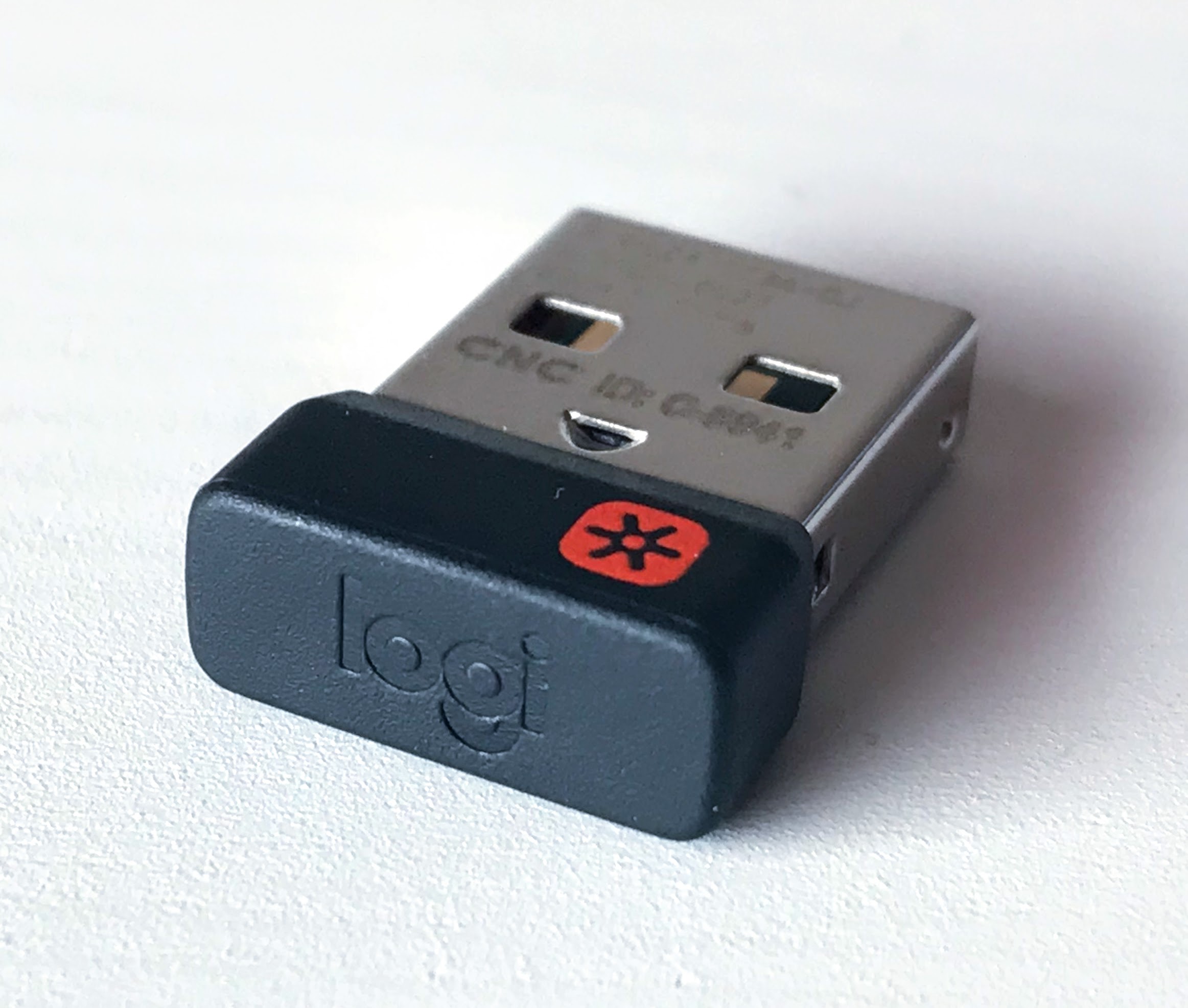
The Logitech Unifying Receiver (tiny USB dongle) fails when drivers corrupt after Windows updates. First, confirm you’re using the original receiver—it has a Logitech logo and model number matching your keyboard. Plug it directly into a USB 2.0 port (black insert), not USB 3.0 (blue), which causes signal interference.
Re-Pairing via Logitech Unifying Software
- Download Logitech Unifying Software from support.logi.com
- Install while receiver is plugged in
- Launch software and click “Pair a new device”
- Turn keyboard OFF/ON—software detects it automatically
If pairing stalls, press F12 briefly to force channel detection. Avoid third-party USB hubs; connect directly to your PC’s rear ports for stable power.
Random Disconnects and Wireless Interference Solutions

Intermittent dropouts during typing usually indicate signal disruption. The K375s operates on 2.4GHz—same as Wi-Fi routers and microwaves. Move your keyboard within 3 feet (1 meter) of the receiver during troubleshooting. For persistent disconnects:
Eliminating Signal Interference Sources
- Relocate wireless routers at least 6 feet away
- Turn off Bluetooth speakers/headphones temporarily
- Avoid placing keyboard near metal surfaces (filing cabinets, laptops)
- Test in another room to rule out local interference
If using USB 3.0 ports, insert a USB 2.0 extension cable between receiver and PC—this reduces electromagnetic noise by 70%.
Keys Not Responding: Cleaning and Reset Procedures
Sticky or unresponsive keys often stem from debris under keycaps. Before disassembling, try this safe reset:
– Turn keyboard OFF
– Press Escape, O, Escape, O, Escape, B rapidly
– Power ON while holding keys
This clears internal memory without data loss. For physical obstructions:
Safe Keycap Cleaning Without Damage
- Power OFF the keyboard
- Tilt at 75-degree angle
- Use compressed air in short bursts (6-inch distance)
- For gunked keys, dampen cotton swab with isopropyl alcohol
- Wipe between key stems in circular motion
Never remove keycaps—K375s uses scissor-switch mechanisms that break during reattachment. Test keys with Windows On-Screen Keyboard to isolate software issues.
Caps/Num Lock Indicator Mismatch Troubleshooting
When keyboard lights don’t match actual states (e.g., Num Lock lit but keypad inactive), driver conflicts are culprit. Reinstall Logitech Options+ software:
1. Uninstall via Control Panel > Programs
2. Reboot your PC
3. Download latest Logitech Options+ installer
4. Install while keyboard is connected
Verify Windows language settings match your physical keyboard layout—mismatched US/UK layouts cause “missing keys” illusions.
Advanced Reset for Unresponsive Keyboards
Standard resets fail when firmware freezes. Perform a full capacitor discharge:
1. Remove batteries for 15 minutes
2. Press every key firmly for 20 seconds
3. Reinsert fresh batteries
4. Hold Esc + O + Esc + O + Esc + B for 8 seconds
Successful reset shows all LEDs flashing simultaneously. If lights don’t respond, the PCB may need professional repair—proceed to warranty steps.
Firmware and Driver Updates for K375s
Outdated firmware causes 40% of persistent connection issues. Check for updates:
– Open Logitech Options+
– Click “Check for updates” under device settings
– Install any available firmware patches
For Windows driver issues:
1. Open Device Manager
2. Expand “Keyboards”
3. Right-click Logitech device > “Update driver”
4. Select “Search automatically”
Never use third-party driver updaters—they often install incompatible versions.
When Logitech Support Replaces Your K375s Keyboard
Contact Logitech only after exhausting all fixes. Have these ready:
– Serial number (under battery compartment)
– Proof of purchase (within 2-year warranty)
– Video showing the issue
Describe symptoms precisely: “Keyboard powers on but no input on channel 2 after Windows 11 update.” Support typically offers replacement within 48 hours for verified hardware defects. Avoid disassembling the keyboard—this voids warranty coverage.
Final Note: Most Logitech K375s keyboard not working issues resolve through power checks, channel management, or Bluetooth re-pairing. Implement monthly maintenance: replace batteries before low-power warnings, clean with compressed air, and update Logitech Options+ software. Keep your USB receiver plugged into a dedicated port—frequent unplugging corrupts pairing data. If problems persist after 3 reset attempts, contact Logitech with your serial number for a seamless warranty replacement. Your keyboard’s multi-device functionality will outlast three standard keyboards when maintained properly—don’t replace it prematurely.